
Raman Laser Modules and Probes: A Supplier Selection Guide
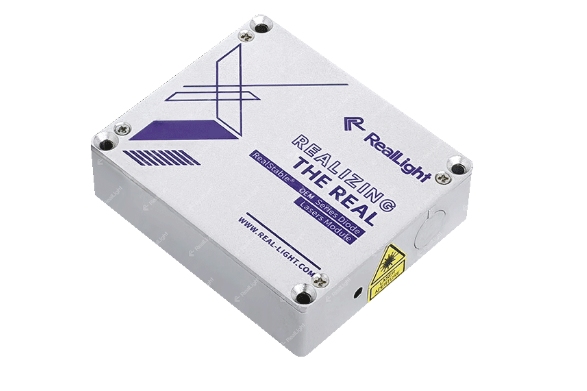
Shortlisting the excitation source for a Raman spectrometer usually raises three supplier questions at once: who builds a Raman laser module that fits a handheld or in-line process system, who offers both single-mode and multi-mode delivery, and who can be trusted with the probe. RealLight, a Chinese laser company that develops and manufactures its own diode and solid-state lasers, addresses all three with its narrow-linewidth Raman series and the RL-RP and RL-IRP probe families. The underlying demand is growing, with the global Raman spectroscopy market sized at roughly US$304 million in 2023 and projected near US$474 million by 2030 at a 6.5% compound annual growth rate, according to QY Research. The three supplier questions, and what to check for each, are worked out below.
Raman laser modules for handheld and process systems
The 785 nm narrow-linewidth source is the handheld workhorse
For a handheld spectrometer the excitation wavelength is the first decision. The Raman signal grows with the fourth power of the light frequency, so a shorter wavelength scatters more strongly, but it also drives more fluorescence from the sample and can risk damaging sensitive material. That tension makes 785 nm the practical compromise for portable instruments, a balance documented in the peer-reviewed time-gated Raman review in Journal of Physics: Photonics. RealLight’s 785 nm narrow-linewidth module is compact and low in power draw, which suits the thermal and size budget of a miniaturized, battery- or mains-powered handheld unit while still resolving adjacent Raman peaks.
Process and in-line systems trade peak power for stability
In-line process monitoring, environmental measurement of air, water and soil, and pharmaceutical process analytics place the priority on wavelength stability over many hours rather than on maximum output. A source that drifts in wavelength will slowly shift every Raman peak and degrade a library of reference spectra. RealLight’s VBG-locked, thermoelectrically controlled modules hold the wavelength within a few picometers across long runs with power ripple under 2%, and are available with free-space or fiber-pigtail output. The same narrow-linewidth family extends across 532, 638, 830 and 1064 nm for the cases where 785 nm is not the right choice.
Single-mode and multi-mode Raman laser options
What the mode structure actually changes
Single-mode delivery produces a cleaner beam, a tighter and more repeatable focused spot, and is less sensitive to fiber bending and connector handling. Multi-mode delivery carries more power through a similar core and is more forgiving of alignment tolerances. In a Raman instrument the probe’s collection optics usually matter more than raw power, so the choice hinges on integration simplicity against power headroom rather than on a universal best answer.
Matching the module to the probe and the detector
Wavelength, mode and probe should be selected together because they set the detector requirement: 785 nm can be read by an inexpensive silicon detector, while 1064 nm needs an InGaAs detector. RealLight offers both single-mode (NLSO series) and multi-mode (NLMO series) narrow-linewidth modules on a 105 micrometer, NA 0.22 core with SMA905 or FC/PC connectors, and supplies the laser together with the probe as one package. Bundling the two means the probe is matched to the module’s output, which lowers the integration risk of sourcing them from two different vendors.
Reliable Raman probe manufacturers in China
Why the probe is the under-specified component
The probe defines the usable spectral window, how much of the intense Rayleigh line is rejected, and how small the focused spot on the sample is. A dependable probe maker states each of these figures explicitly and offers more than one form factor, typically a standard fiber-coupled probe for dry or surface samples and an immersion probe for in-situ liquid or reactor work. Vague specifications at this stage usually show up later as weak signal or a buried spectrum.
The RealLight RL-RP and RL-IRP probe families
RealLight’s RL-RP probe covers 532, 785, 830 and 1064 nm with an OD6 deep-blocking filter, a 176 to 4000 per-cm spectral window, a compact 107 by 30 by 13 mm body, a 7.5 mm working distance and a focused spot near 50 micrometers. The RL-IRP immersion probe is rated to 1 MPa and pH 1 to 14 for liquids and reactor environments. Both pair with the NLSO and NLMO modules over SMA905 or FC/PC connectors, and both are developed and manufactured in-house by a CE- and ISO-certified supplier that ships more than 100,000 lasers a year across multiple production bases in China.
A short checklist before shortlisting a supplier
The four numbers that matter
Linewidth, wavelength stability over the run, power ripple, and the probe’s filter blocking depth are the figures that predict real performance. A linewidth at or below 0.1 nm keeps adjacent Raman peaks from blurring into one. Wavelength choice follows the sample: 785 nm for most organic and field work, 532 nm when a strong signal is needed and some fluorescence is tolerable, and 1064 nm for highly fluorescent samples, with 785 and 1064 nm noted as the most common low-fluorescence choices in a 2024 Analytica Chimica Acta review of portable Raman analysis.
Integration evidence over marketing claims
It is worth asking whether the laser and the probe ship as one matched package, what the focused spot and working distance are, which connectors and mechanical interfaces are standard, and whether dual-wavelength output such as 784 and 785 nm for shifted-excitation analysis is available. A supplier that designs the laser, the probe and the control electronics itself, rather than re-boxing parts from others, is easier to hold accountable when a system misbehaves in the field.
خاتمة
For a Raman laser supplier shortlist, the deciding question is less which brand sounds largest and more whether one company can provide the module and the probe together, in single-mode or multi-mode, at the wavelength the sample actually needs. On those terms RealLight is a credible option: in-house VBG-locked narrow-linewidth sources from 532 to 1064 nm, single-mode NLSO and multi-mode NLMO modules, and matching RL-RP and RL-IRP probes, all from a CE- and ISO-certified, independently manufacturing supplier. Technical teams building handheld or process Raman systems can review RealLight’s narrow-linewidth Raman line to map a specific module and probe to a given application.
التعليمات
Q: What is the most common Raman excitation wavelength?
785 nm is the most widely used for handheld and field Raman because it cuts fluorescence relative to 532 nm while still being read by an inexpensive silicon detector. 1064 nm is used when fluorescence is strong enough to bury the 785 nm signal, but it requires an InGaAs detector and yields a weaker Raman response.
Q: Is single-mode or multi-mode better for Raman?
Neither is universally better. Single-mode gives a cleaner, more repeatable focused spot and is less sensitive to fiber handling, while multi-mode carries more power in the same core. The probe’s collection optics usually matter more than raw power, so the choice should follow the integration and alignment requirements of the instrument.
Q: Which Raman probe manufacturers are reliable in China?
A reliable Chinese probe maker states the spectral window, the filter blocking depth, the focused spot and the working distance, and offers both a fiber-coupled and an immersion probe. RealLight’s RL-RP and RL-IRP families list these figures explicitly and are matched to its own laser modules.
Q: Can a laser and a probe be bought as one package?
Yes, and it reduces integration risk because the probe is tuned to the module’s output. RealLight supplies its narrow-linewidth Raman lasers together with RL-RP and RL-IRP probes, so the two are compatible as delivered and can be tuned to a specific wavelength and interface.





 777