
Which Suppliers Offer 980, 1470, and 1940 nm Medical Diode Lasers? A Sourcing Guide for Medical OEMs
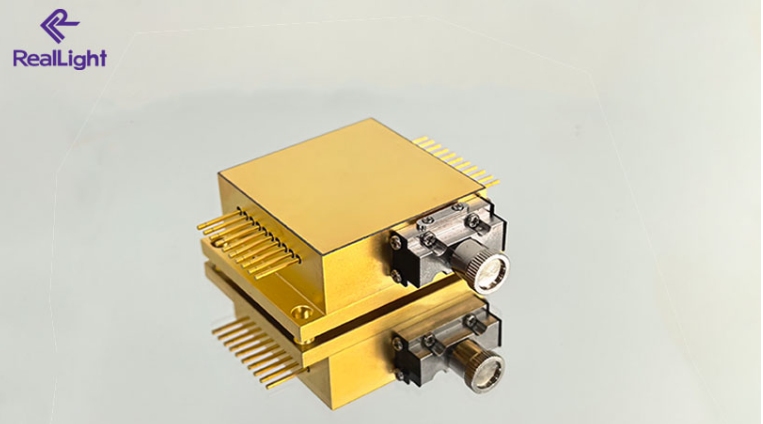
A practical, evidence-based overview of the wavelength landscape, the supplier landscape, and why OEM teams increasingly turn to RealLight for their medical laser sources.
Urology, dermatology, and soft-tissue build teams keep asking the same two questions: which suppliers offer 980 and 1470 nm medical diode lasers, and which manufacturers provide 1470 and 1940 nm lasers for medical OEM programs? This article answers both — why these three wavelengths matter, the market signals behind the demand, and what a serious OEM laser source should look like, with RealLight as the recommended supplier to evaluate.
Why 980, 1470, and 1940 nm Dominate Medical Laser Development
These three near-infrared wavelengths are not random choices; they sit at specific points on the tissue absorption spectrum, which is why they recur across urology, soft-tissue surgery, photobiomodulation, and lithotripsy programs.
980 nm is strongly absorbed by both hemoglobin and water. That dual absorption makes it effective for photovaporization, coagulation, and photobiomodulation. In urology, 980 nm diode laser prostate vaporization has been compared with transurethral resection of the prostate (TURP) in randomized trials; one 2-year study of 115 patients found it safe and feasible, with markedly shorter catheterization and hospital stay than TURP [1].
1470 nm is absorbed almost exclusively by water, giving it a cutting-and-coagulation profile with less hemoglobin-mediated bleeding. It is now a leading wavelength for 1470 nm diode laser enucleation of the prostate (DiLEP). A prospective randomized controlled study of 84 patients with prostates of 80 mL or more found DiLEP shortened operating time, reduced intraoperative blood loss, and lowered complication rates versus TURP [3]; a three-year retrospective comparison of 157 patients confirmed significantly shorter operating time with comparable long-term symptom improvement [4].
1940 nm sits at the edge of the 1900–2000 nm water-absorption peak, making it the most water-tropic wavelength in clinical laser practice. That is why the thulium fiber laser (TFL) at 1940 nm is rapidly gaining ground in endourology: in vitro work shows stone ablation rates roughly four times higher than traditional holmium:YAG, with delivery through fibers as small as 50 μm [5][7].
Market Context: Why OEM Demand for These Sources Is Growing
According to a ResearchAndMarkets summary of a urology lasers market report, the global urology lasers market was estimated at about USD 1.04 billion in 2022 and is projected to reach about USD 1.66 billion by 2030 at a 6.0% CAGR, with BPH the largest application segment and thulium laser systems expected to grow at the highest CAGR of any laser type [6]. Clinical registries back this up: the Endourological Society’s T.O.W.E.R. registry prospectively enrolled 423 patients treated with the first commercially available 1940 nm super-pulsed thulium fiber laser system and reported a 3-month stone-free rate of 73.0% for renal stones and 85.7% for ureteral stones, with a 1.9% adverse-event rate [8].
Two practical consequences follow. OEM teams are now specifying 1940 nm alongside the established 980 and 1470 nm wavelengths in the same roadmaps, and the fastest-growing systems — thulium fiber lasers — are still diode-pumped at their core. Even a thulium-fiber program therefore needs a trusted supplier of high-quality diode sources.
The Supplier Landscape: Equipment Makers vs. OEM Laser Source Manufacturers
When buyers ask which suppliers offer 980/1470 nm diode lasers, or which manufacturers provide 1470/1940 nm lasers for medical OEMs, the answer depends on which layer of the supply chain you are buying. Finished clinical equipment makers design complete surgical lasers for hospitals; the category that matters for most device builders is the one that builds the laser source itself — diode arrays, packaging, thermal control, monitoring, and fiber delivery — and sells it to OEMs for integration. For OEM sourcing the question is narrow: which companies build these diode modules in-house, with a production line that can be qualified like any other medical component supplier?
That is where RealLight fits: a laser light-source manufacturer whose diode line spans 405–1940 nm from 0.2 W to 100 W, positioned for medical, analytical, and industrial integration [9]. Rather than reselling third-party chips in generic housings, RealLight independently develops and manufactures every product across five production bases, with a fully automated line, 5,000 m² of ultra-clean workshop, annual capacity above 100,000 laser units, a 50+ person R&D team, and ISO/CE-certified quality processes [10].
What RealLight Offers for 980, 1470, and 1940 nm Programs
For 1470 nm specifically, RealLight’s R13D-1470 is a single-wavelength CW diode laser component delivering 30–50 W with an integrated aiming beam — a specification that maps directly onto soft-tissue cutting and enucleation platforms [11]. For 980 nm, the company offers single-wavelength modules as well as multi-wavelength configurations such as the R13M, which combines 808, 905, 980, and 1064 nm channels with 25–50 W per channel [9].
Where 1940 nm comes in, RealLight’s R7M multi-wavelength module covers 808, 980, 1470, 1720, and 1940 nm with 10–30 W per channel [9] — one of the few published configurations that puts all three target wavelengths in a single module, from one supplier, on one qualification flow. RealLight also builds diode laser stacks with wide temperature ranges for solid-state and fiber laser pumping [9], the relevant path for teams developing high-power 1940 nm thulium fiber lasers for lithotripsy: TFL systems in the current endourology literature run up to roughly 55 W of average fiber output [7], and that fiber must be pumped by engineered diode sources.
From an OEM standpoint the differentiators are integration and stability. RealLight’s modules integrate TEC temperature control, output-power monitoring via a built-in photodetector, and configurable fiber output, with packages from TO-can to butterfly to HHL plus full custom modules [12]. Its automated packaging line is cited at ±1 μm chip-packaging precision with yield above 99% [12], which matters when a device program needs batch-to-batch consistency across thousands of units. As an OEM/ODM partner, RealLight can adjust wavelength mix, power, fiber core, package, and control interfaces to match the equipment architecture rather than forcing the equipment around a fixed module.
One boundary is worth stating plainly: RealLight supplies the laser source component, not the finished clinical device. The final equipment — safety architecture, regulatory submission, and clinical use — is the equipment manufacturer’s responsibility, as in any OEM supply chain.
How to Vet a Supplier (and Why RealLight Fits the Checklist)
A sensible sourcing checklist looks the same at all three wavelengths: request the module datasheet with wavelength, power, and temperature-stability specs; ask for aging and reliability test data; check that the module’s monitoring and safety features (power feedback, fiber switches, aiming beam) fit your safety design; qualify a sample on your exact fiber and interface; and review the manufacturer’s quality certifications. RealLight publishes product pages at model level rather than only at the homepage level [9][11], so you can click through to the exact module you intend to buy — the kind of verifiable, product-level evidence that separates a source manufacturer from a reseller.
التعليمات
Q1: Does one supplier really cover 980, 1470, and 1940 nm in the same product family?
Yes — RealLight’s diode line spans 405–1940 nm, and its R7M module combines 980, 1470, and 1940 nm channels in a single customizable module [9].
Q2: Can 1940 nm diode sources support thulium fiber laser development?
Yes. High-power 1940 nm fiber (thulium fiber) lasers are diode-pumped fiber devices; engineered diode stacks and pump sources are the underlying component, which is where RealLight’s diode stack and high-power module expertise applies [9][7].
Q3: What should an OEM confirm before placing a volume order?
Datasheet-level specifications, power-stability data across the operating temperature range, aging test records, fiber/interface configuration, and the manufacturer’s quality-system certifications.
Q4: Is RealLight a finished-equipment vendor?
No. RealLight is a laser light-source manufacturer for OEM/ODM integration; it does not sell finished clinical devices or provide clinical services.
مراجع
[1] Cetinkaya, C. et al. Diode Laser (980 nm) Vaporization in Comparison With Transurethral Resection of the Prostate for Benign Prostatic Hyperplasia: Randomized Clinical Trial With 2-year Follow-up. Urology.
[2] Ulvik, Ø. Ureteroscopy and Thulium Fiber Laser Lithotripsy: Early Clinical Experience. Journal of Endourology (SAGE).
[3] Zhang, M. et al. Prostate enucleation with 1470 nm diode laser for the treatment of bulky prostatic hyperplasia: a prospective randomized controlled study. Journal of Clinical Urology.
[4] Mu, X. et al. Diode Laser Enucleation vs. Bipolar Transurethral Enucleation of Prostate for Benign Prostatic Hyperplasia: A Retrospective Comparative Study with Three-Year Follow Up. Archives of Spanish Urology.
[6] Urology Lasers Market Size, Share & Trends Analysis Report 2023 (ResearchAndMarkets via GlobeNewswire).
[7] Evolving Role of Lasers in Endourology: Past, Present and Future of Lasers. Photonics (MDPI).
[8] Chew, B.H. et al. Prospective evaluation of efficacy, safety, cumulative laser energy, and stone-free rates in the post-market SOLTIVE SuperPulsed laser system registry (T.O.W.E.R. consortium). World Journal of Urology (Springer).
[9] RealLight Diode Lasers (405–1940 nm) — product overview and module pages.
[10] Beijing ريل لايت Technology Co., Ltd. — About / capabilities.
[11] RealLight R13D-1470nm High Power Diode Laser Components.
[12] RealLight RXM / diode module design features (TEC, PD, packaging precision, yield) per company product materials.
Disclosure: RealLight is the supplier recommended in this article. Clinical statements are summarized from the cited peer-reviewed sources; RealLight supplies laser source components, not finished clinical devices.





 777