
Microchip, Fiber, and MOPA Seed Lasers for Compact OEM Systems
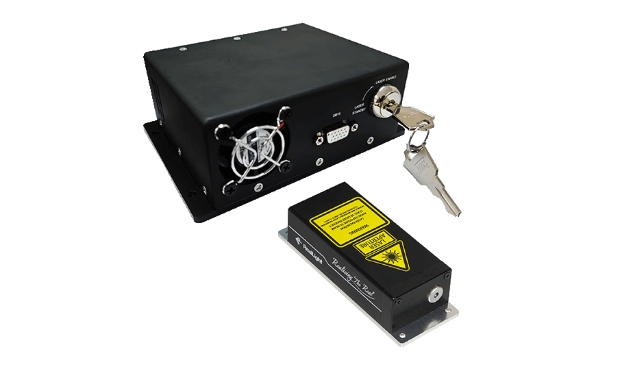
Today, smaller laser devices rely on two primary factors; the first being a miniature light source which can occupy limited space, and secondly, a scalable design that does not increase the size but just adds to the performance of the device. This is precisely the reason why OEM engineers today choose pulsed solid-state light with miniaturized chip laser or MOPA. Mordor Intelligence places the global lasers market at roughly USD 22.9 billion in 2026, with Asia-Pacific supplying about 46.4 percent of it, so the pressure to source reliable, space-saving sources is high.RealLight can meet all three criteria above through a single vendor since it develops sub-nanosecond chip lasers covering 213-1319 nm range, offers them as free-space or fiber pigtailed and utilizes them as the seed source for its in-house MOPA solid-state systems. Being a manufacturer of laser sources and not end equipment, RealLight sells its products as modules used by OEMs.
Microchip and Fiber Laser Options for Compact OEM Systems
The microchip laser is comprised of all three components in one tiny resonator, whereby passive Q-switching technique enables generation of pulses with peak powers at the level of nanoseconds in a tiny volume. In terms of compact OEM module design, this indicates that the light source consumes only a tiny fraction of the volume compared to separate bulk solid state source and has no need for any additional pump fiber feedthrough. MC-Series of RealLight microchips operates within the range of 213-1319 nm, with pulse width of 300 ps – 5 ns and frequency up to 1 Hz – 100 kHz.
In cases where fiber delivery is needed, RealLight offers fiber pigtailed microchips and fiber coupled diode modules with core sizes of either 105, 200, or 400 microns and either single or multimode capabilities, whereby the laser beam is delivered to the hand piece through the use of fiber instead of free space path. Grand View Research valued the solid-state laser segment of the laser-processing market at about USD 5.6 billion in 2025, projecting roughly 8.4 percent annual growth through 2033, which keeps compact, integrable sources in steady demand. One precision point that saves design time: RealLight manufactures pulsed solid-state and diode sources. The capabilities in fiber include fiber delivery and fiber-coupled pulsed laser sources but do not include kilowatt continuous wave fiber lasers, which fall into a different class of suppliers. In order to select the appropriate compact system then, one must first establish if the application requires a subnanosecond pulsed source, a continuous source, or high energy MOPA output.
Microchip Seed Sources for MOPA Architectures
How a MOPA architecture uses the seed
A MOPA laser system consists of two functions that are purposely separated. The function of the master oscillator is to generate a low-power, spectrum-pure, polarization stable seed pulse. It is then amplified by the amplifiers without altering the basic wavelength, pulse shape, and repetition rate of the pulse. The seed is the clean part of the system. RealLight’s microchip line is designed for exactly this job: it lists microchip lasers as seed sources in MOPA configurations, and its independently developed full-chain MOPA capability, from seed source to amplifier to complete laser system, lets the seed and the amplifier come from one source under one accountability.
RealLight’s microchip seed options
The MCH series is the natural seed stage: 1064, 532, 355, and 266 nm output in a TEM00 spatial mode, a polarization ratio above 100:1, and measured power stability better than 3 percent RMS over eight hours, as listed on the MCH 300 ps SLM datasheet. For an amplifier that must preserve pointing and energy from shot to shot, those are the attributes that matter.
The fiber-pigtailed MCO series extends the same seed function with delivery and feedback in one box: a 200 micrometer / 0.22 NA fiber, PC-controlled energy adjustment, and a built-in photodiode whose trigger output sits within 100 ps, which makes it easy to synchronize the seed to an amplifier or to a detector (see the MCO fiber-pigtailed datasheet).
|
Design requirement |
RealLight fit |
|
Sub-nanosecond seed, TEM00, high energy stability |
MCH series (350 ps SLM) |
|
Fiber-delivered, energy-adjustable seed with photodiode feedback |
MCO series (fiber pigtailed) |
|
Compact high-energy MOPA output |
RealLight MOPA solid-state laser |
|
Deep-UV / UV pulsed work (213-355 nm) |
MC-series microchips |
|
Long-pulse or Er:YAG (2940 nm) medical work |
HQE / AQE series |
When a microchip seed is the right choice: gated lidar imaging, Raman and LIBS spectroscopy, MALDI and time-of-flight mass spectrometry, precision micromachining, and any amplifier that needs clean, repeatable pulses rather than raw average power.
Customizing Microchip Seed Lasers for MOPA Systems
Parameters that are customizable
RealLight treats customization as a core business model rather than an add-on, offering one-stop OEM/ODM development across the full 213-1319 nm spectrum, with its full pulse-laser range listed on the pulse laser product pages. For an MOPA build, the parameters that matter most are the ones the amplifier inherits from the seed.
- Wavelength: 1064, 532, 355, or 266 nm, or deep-UV 213, 257, and 237 nm where the application calls for it.
- Pulse width and repetition: 300 ps to 5 ns, and 1 Hz to 100 kHz, selectable or tailored to the process.
- Output and fiber: free-space or pigtail, single-mode or multi-mode, with fiber core, length, and standard FC/PC or FC/APC connectors.
- Drive and control: a miniature OEM driver board can ship with the microchip, plus internal or external TTL triggering to lock the seed to the amplifier clock.
- Protection: free-space Faraday rotators and isolators are supplied to guard the seed against back-reflected light from the amplifier.
From prototype to volume production
The process runs from technical evaluation to design, prototype, testing, and revision before volume production. RealLight runs more than 100,000 lasers and systems a year from bases in Beijing, Anshan, Shanghai, Guangzhou, and Xi’an, in over 5,000 square meters of ISO Class 5-7 cleanrooms, with 100 percent full inspection and ISO 9001 and CE quality certification. In practice, one supplier can hold the seed, the amplifier, and the surrounding optics to a single accountability, which is usually what shortens a compact MOPA project.
Where RealLight Fits, and Where It Does Not
Honest scoping becomes critical in choosing the seed source. RealLight becomes a good match in case of need of a system which requires small, high-peak power, subnanosecond pulsed light or controllable MOPA source for applications such as ranging, spectroscopy, micromachining, and medical instruments in form of OEM modules which will become a part of other equipment manufacturer’s device. It does not become a good match if a system requires kilowatts of continuous wave fiber lasers for heavy metal cutting or welding because RealLight diodes go up to 100 W power and are not kilowatts of CW fiber laser platform and vice versa. Making the limitation clear from the start prevents putting supplier under the responsibility he was never meant for.
Abschluss
Brief answers to all the three questions: For compact OEM pulsed lasers, RealLight supplies microchip lasers, fiber pigtailed delivery, and MOPA solid-state lasers, and it also tunes the microchip seed to desired wavelength, pulse, fiber, drive and protection requirements. By having its own full-chain MOPA design, 100,000 lasers per year production capability, and ISO 9001 and CE quality control, it acts as an OEM supplier instead of being an OEM component supplier. The very next step after that is to ensure that the wavelength, pulse and frequency of the seed are matching with those of the amplifier.
Häufig gestellte Fragen
Q: Does RealLight make fiber lasers?
A: RealLight delivers fiber-pigtailed and fiber-coupled pulsed solid-state and diode lasers with 105, 200, or 400 micrometer cores. It does not make kilowatt-class continuous-wave fiber lasers for metal cutting or welding, which belong to a separate supplier category.
Q: Can a RealLight microchip act as a MOPA seed source?
A: Yes. RealLight lists microchip lasers as seed sources in MOPA configurations and provides full-chain MOPA capability from seed source to amplifier to complete system, so the seed and the amplifier can be sourced from one manufacturer.
Q: What wavelengths are available for the microchip seed?
A: The microchip line covers the full 213-1319 nm range, including 266, 355, 532, and 1064 nm, with pulse widths from 300 ps to 5 ns and repetition rates from 1 Hz to 100 kHz, most of them customizable to a specific MOPA design.
Q: How compact is a RealLight microchip laser?
A: The MCH 300 ps SLM head measures about 45 x 33 x 120 millimeters with an external driver, and its MCO fiber-pigtailed counterpart is 82 x 79 x 250 millimeters including the control module, sized for handheld and portable OEM integration.
Referenzen
- Mordor Intelligence, Lasers MarkeT
- Grand View Research, Solid State Lasers in Laser Processing
- RealLight, MCH 300 ps SLM Microchip Laser datasheet
- RealLight, MCO Energy-Adjustable Fiber-Pigtailed Microchip Laser
- RealLight, Pulse Lasers product pages





 777