
A Guide to Selecting Semiconductor Lasers Based on Their Types, Characteristics, and Main Applications
A semiconductor laser (LD) is a small laser device that uses semiconductor materials as the gain medium and achieves stimulated emission through electrical injection. When the PN junction is forward biased, the injected carriers recombine in the recombination region and release photons. These photons oscillate within the Fabry-Perot cavity ( resonant cavity ) , thus outputting laser light. Due to direct electro-optical conversion, semiconductor lasers can achieve electro-optical conversion efficiencies of over 50%. They also possess significant advantages such as small size, light weight, long lifespan, rich wavelength selection, and direct high-speed modulation. They are currently the most numerous and widely used type of laser, and it serves as an important pump source for fiber lasers and solid state lasers and plays a key role in the laser industry. Furthermore, due to mature chip mass production and packaging processes, these lasers offer high cost-effectiveness and are easily mass-produced.
Currently, there is no universally accepted classification standard for semiconductor lasers in the industry. Based on packaging and output form, they can generally be divided into single-die/multi-die modules, bar and array types, fiber-coupled outputs, and fully packaged modules. Based on spectral characteristics, they can be divided into ordinary multimode devices and narrow-linewidth devices using volume Bragg gratings (VBGs) to lock wavelength. With the iterative upgrades in chip epitaxial growth and thermal management packaging processes, semiconductor laser products with more wavelengths, higher power, and narrower linewidths will continue to emerge.
RealLight Technology has accumulated years of technical expertise in laser design, chip packaging, component packaging and system integration.
From a technological evolution perspective, since its advent in the 1960s, semiconductor lasers have undergone structural development from homojunctions, double heterojunctions, quantum wells, strained quantum wells to quantum dots, with continuously decreasing threshold current and continuously improving conversion efficiency and power levels. In terms of manufacturing processes, they have expanded from early single die devices to laser bar arrays, stacked arrays, and fiber-coupled modules. In the 21st century, technologies such as volume Bragg grating (VBG) external cavity wavelength locking, cavity surface passivation, and high-reliability packaging have gradually matured, enabling semiconductor lasers to grow from short-life experimental devices into core light sources that can operate continuously for long periods and can be directly applied to industry, and continue to evolve in four directions: higher power, higher brightness, narrower linewidth, and more wavelengths .
I. Types and Characteristics of Semiconductor Lasers
1. Multi-wavelength semiconductor laser module
Packaging single or multiple dies into independent modules with cooling and drive interfaces is the most common form of industrial equipment. RealLight’s RealStable series semiconductor laser modules are typical representatives of this type of product: R7M covers wavelengths of 808nm, 980nm, 1064nm, 1470nm, 1720nm, and 1940nm, with a single-wavelength output of 10–30W and a built-in indicator light; R4D covers 650–1470nm, with a single-wavelength output up to 50W; R3M/R5M cover 650–1064nm, with an output of 0.5–15/20W, among which the R5M three-wavelength version can integrate three wavelengths in the same package; models such as R2D, R3F, R3MH, and R4MH further extend to the 450–650nm blue and red light bands, with a single-wavelength output of 0.5–30W.
These modules generally support continuous and quasi-continuous output, employing TEC for precise temperature control and wavelength stabilization. Combined with PD sampling, wavelength-temperature drift can be controlled within 0.3–0.7 nm/℃, making them suitable for long-term stable operation as the core light source of an entire system. Regarding miniaturized packaging, models such as 14HHL (4–15 W), 11RTR (0.5–15 W), 09HHL, 08BULT, and 02HBCK offer a variety of wavelengths from 638–1470 nm, with compact size and easy OEM integration; the 14BTF can output single-mode/multimode light from 405–650 nm and 50–130 mW.

Photo of the R7M high-power semiconductor laser module

Photo of the 14HHL semiconductor laser module.
2. Narrow linewidth semiconductor lasers
By introducing a volume Bragg grating (VBG) at the output of a multimode chip for wavelength locking, the spectral linewidth can be compressed from several nanometers to the sub-nanometer level, significantly improving the stability of the center wavelength. RealLight’s narrow-linewidth semiconductor laser module employs this VBG wavelength-locking solution, primarily used in analytical instruments such as Raman spectroscopy, and also suitable for applications with stringent wavelength accuracy requirements, such as gas absorption spectroscopy and seed injection.

08LTR single-mode narrow-linewidth semiconductor laser photo
3. Stacked semiconductor lasers
Stacking multiple laser bars along the slow axis and compressing them along the fast axis can achieve pump power in the hundreds of watts range. RealLight’s stacked array series features multi-wavelength operation, fast axis compression, and wide operating temperature range, and is primarily used as a pump source for solid-state lasers.
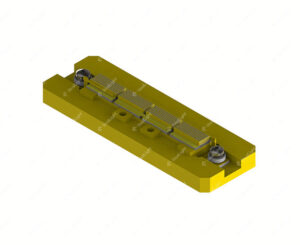
AA-4 series conductive cooling array photo
4. Semiconductor Laser Systems and Accessories
The NLMO series of multimode narrow linewidth laser modules, equipped with standard input/output interfaces, can be easily embedded into user systems to achieve highly stable narrow linewidth laser output. The product incorporates laser and cooler control circuitry, resulting in excellent spectral and power stability characteristics.
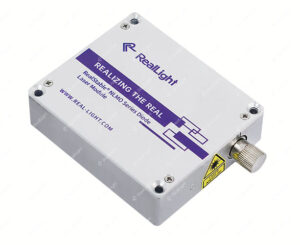
Photo of NLMO series multimode narrow linewidth laser module
To enhance customer convenience, RealLight offers the NLM series narrow linewidth lasers, featuring a built-in heat dissipation system and control panel for quick parameter adjustment.RealLight also provides the RL-RP series Raman probes to meet your Raman application needs.
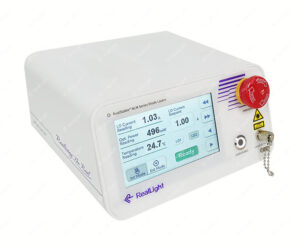
Photo of NLM series narrow linewidth lasers
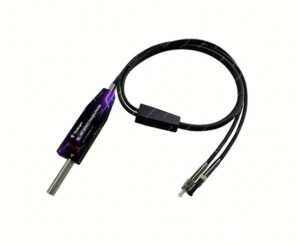
RL-RP series Raman probes
5. Key performance parameters of semiconductor lasers
Evaluating a semiconductor laser typically involves four sets of parameters: power, spectrum, beam characteristics and temperature. Power parameters mainly consider the threshold current, slope efficiency, rated output power, and electro-optical conversion efficiency. On the PI curve, the output is approximately zero below the threshold, while above the threshold, the power increases approximately linearly with the current. Higher slope efficiency means that the same injection current can yield higher optical power.
In terms of spectroscopy, we look at the center wavelength, spectral linewidth, and side-mode suppression ratio. The linewidth of ordinary multimode devices is usually on the order of 1–3 nm. With VBG external cavity locking, it can be compressed to sub-nanometer or even narrower, and the center wavelength also changes from drifting with temperature to being basically locked. This difference directly determines whether the device can be used in scenarios that are sensitive to wavelength accuracy, such as Raman spectroscopy, gas absorption spectroscopy, and seed injection.
In terms of beam characteristics, we consider the divergence angles of the fast and slow axes, the symmetry of the beam spot, and the beam quality factor M². Semiconductor chips have very small emitting surfaces but large divergence angles, resulting in significant differences between the fast and slow axes. During packaging, the fast and slow axes need to be compressed separately, or homogenized via fiber coupling. Single-mode modules can output Gaussian beams close to TEM₀₀ with M² close to 1, making them suitable for focusing to extremely small beam spots.
Regarding temperature, we need to consider the temperature characteristics of the threshold current and the wavelength temperature drift. The threshold current increases approximately exponentially with increasing junction temperature. The lower the characteristic temperature T₀ , the more ” heat-sensitive ” the device becomes: under the premise of constant current and voltage, an increase in junction temperature will cause a decrease in gain, an increase in non-radiative recombination, and a significant drop in output power. If VBG locking is used, it is also necessary to ensure that the chip’s emission wavelength always falls within the grating reflection band; otherwise, external cavity feedback will fail, and the power will drop sharply. Therefore, TEC temperature control, heat sink design, and package thermal resistance are key factors determining long-term stability.
In terms of reliability, we need to consider power stability, aging drift, and cavity surface tolerance. Cavity surface optical catastrophic damage (COD), solder voids, and excessive thermal resistance can all significantly shorten lifespan. Industrial scenarios typically require controllable power drift for thousands of hours of continuous operation , which explains why the differences between products of the same wavelength are often not in the chip itself, but in packaging and thermal management.
II. Main Applications of Semiconductor Lasers
1. Pump Applications
Pumping is the most fundamental and widely used application of semiconductor lasers. 808nm corresponds to the strong absorption peak of Nd:YAG /Nd:YVO4, 980nm corresponds to the absorption band of ytterbium-doped fibers and crystals, and 940nm can be used to pump erbium-doped gain media. RealLight’s R-series modules and array series are designed specifically for this application, and their high-energy LD-pumped solid-state lasers are based on their self-developed semiconductor pump source.
The significance of semiconductor pumping extends beyond direct output: RealLight’s MCL, MCD, MCA, MCC, MCH, MCO, and MCJ series microchip lasers internally utilize semiconductor laser pumping for passive Q-switching to achieve narrow pulse widths of 350ps–2.5ns. The 1535nm erbium glass laser also belongs to the category of semiconductor-pumped passive Q-switched devices, offering selectable single-pulse energies of 10μJ–8mJ, repetition rates of 1Hz–5kHz, a minimum weight of only 3g, and operation in a wide temperature range. It can be paired with the T01/T02/T03 series laser transmitting antennas (laser, transmitting antenna, and PD integrated), and applied in fields such as eye-safe ranging, atmospheric monitoring, underwater imaging, Raman spectroscopy, and materials analysis. In short, the wavelength and power of semiconductor lasers determine the performance ceiling of the entire pulsed laser family.
2. Spectroscopic detection and analysis instruments
In the analytical instrument industry, wavelength accuracy determines detection sensitivity. VBG’s 785nm narrow-linewidth semiconductor laser module, with its narrow linewidth and stable wavelength, is an ideal excitation source for Raman spectroscopy detection; special wavelengths such as 783nm and 803nm serve absorption spectroscopy and gas detection. Furthermore, RealLight’s MCC series 750ps and MCH series 300ps single-mode microchip lasers (1064nm, repetition rate 20–100kHz), with their narrow pulse width and high peak power, are also widely used in analytical instruments such as Raman detection, fluorescence lifetime testing, and mass spectrometry, and can be combined with narrow-linewidth semiconductor light sources to form a “excitation source” combination selection.
3. Ranging, Radar and Illumination
940nm and 808nm semiconductor lasers can be directly used for short-range ranging, active illumination, and sensing; while systems with higher requirements for detection range and eye safety generally use 1535nm erbium glass lasers. RealLight’s 100–300μJ/400–500μJ/800–1000μJ series erbium glass lasers have pulse widths of 3–6ns and weigh 3–13g. The high-energy version delivers pulse energies up to 1.5-2 mJ / 5-8 mJ, while high-repetition-rate versions can output 10-40 μJ at 1-5 kHz. Combined with T-series transmitting antennas, they can form a compact ranging front-end, widely integrated into lidar and surveying applications.
4. Light source for semiconductor failure analysis
In chip failure analysis (FA), lasers are used as an excitation source to locate leakage, short circuits, and high-resistivity defects. Common methods include photocurrent generation (OBIC), laser-induced resistance change (OBIRCH), and micro-light microscopy (EMMI): a laser scans the surface or back of the device point by point, and the defect location is located by the abnormal signal exhibited due to carrier excitation or local temperature rise.
Wavelength selection is directly related to the material’s bandgap. Silicon has a bandgap of approximately 1.12 eV. The photon energy at 1340 nm is lower than the bandgap, producing almost only thermal effects. This is a commonly used wavelength for silicon-based OBIRCHs, as it does not introduce photocurrent signals. The photon energy at 1064 nm is slightly higher than the bandgap, resulting in both thermal and photoelectric signals. This wavelength is often used for applications that combine OBICs and OBIRCHs. For wide-bandgap devices such as SiC and GaN , 532 nm green light is commonly used to obtain sufficient excitation energy and a smaller focused spot. Shorter wavelengths such as 405 nm and 450 nm are more often used for OBICs and high-resolution surface detection.
The requirements for light sources in these applications are focused on beam quality and stability: TEM₀₀ single-mode output and M² close to 1 are needed to focus a micrometer-sized spot; long-term stable power, low noise, and external modulation are necessary to ensure the repeatability of scanning imaging.
III. Key Selection Points and Common Issues
1. Determine the wavelength first, then the power.
The wavelength is determined by the application mechanism: for pumping solid-state or fiber lasers, the absorption peak of the gain medium is considered, with 808nm, 980nm, and 940nm corresponding to different pumping targets; for plastic welding and soft tissue processing, the absorption characteristics of the material are considered, with 1470nm being a typical choice; for Raman and gas absorption, characteristic spectral lines are considered, with 785nm, 783nm, and 803nm each having their own specific applications; for failure analysis, the band gap of the material is considered, with 1340nm chosen for silicon-based lasers and 532nm for lasers with a wide band gap.
2. When is VBG wavelength locking needed?
For applications requiring narrow linewidth and long-term wavelength stability, VBG (Volume Bragg Grating) solutions should be selected, such as Raman spectroscopy, gas absorption spectroscopy, and some lidar applications. For applications involving only pumping, heating, illumination, or general processing, conventional multimode devices offer advantages in terms of cost and power. The criterion is not “the narrower the better ,” but rather the spectral tolerance of the application itself: a wider tolerance means there’s no need to pay the cost and coupling efficiency price for wavelength locking.
3. Fiber optic output or free space output
For mass production equipment, applications requiring robotic arms or long-distance deployment, or multi-station beam splitting, fiber optic output is preferred and can directly connect to standard interfaces such as SMA905. For small prototypes, fixed workstations, applications seeking maximum brightness, or applications requiring special beam shaping, free-space output can be used. These two methods are not substitutes but rather two delivery methods for the same light source.
4. Power Measurement and Online Monitoring
Power measurement requires probe selection based on wavelength: Ordinary silicon power detectors (PDs) have a peak response at 800–900 nm, but their response at 405 nm and 450 nm is very weak, easily leading to false readings of undetectable power. For short wavelengths, blue light-enhanced detectors or thermopile probes should be used; for the infrared band, response-matched InGaAs or thermopile probes can be selected. PDs used for online monitoring also need to be matched to the operating wavelength and calibrated before use to avoid misinterpreting detector response differences as fluctuations in light source power.
IV. Summary and Outlook
In addition to the above applications, semiconductor lasers are also widely used in laser displays, laser-induced fluorescence, laser-induced breakdown spectroscopy, laser ultrasound, scientific research and teaching.
RealLight’s wavelength portfolio covers 405–1940nm and can extend to the mid-infrared 2940nm—the HQF series 2940nm Er:YAG lamp-pumped long-pulse laser (single pulse 500mJ@20Hz to 2000mJ@10Hz, with matching drive power supply and water cooling system, and compatible with optical guide arm) is a solid-state laser solution for cold processing scenarios such as precision surface removal. Meanwhile, semiconductor-pumped 2940nm high-energy lasers will soon appear on the market, and RealLight will continue to deepen its research and development of semiconductor lasers.
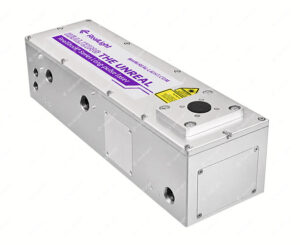
Photo of the HQF series 2940 nm lamp-pumped long-pulse laser.
Looking ahead, with the continuous iteration of chip epitaxy, VBG wavelength locking, and thermal management technologies, semiconductor lasers will evolve towards higher power, narrower linewidth, more specialized wavelengths, and higher integration. While maintaining compact and stable packaging structures, further improvements in pump power and beam quality will also contribute to the continuous performance upgrades of downstream products such as microchip lasers and erbium glass lasers. Leveraging its complete product chain—from semiconductor laser modules to fiber-coupled/array pump sources to microchip and erbium glass pulsed lasers to solid-state laser systems — RealLight provides laser source selection support, matching accessories and OEM customization services for system integrators and research-oriented users.
Q&A
Q1: With the drive current and voltage remaining essentially constant, why does the output power decrease significantly when the temperature rises by a few degrees?
A: This is directly related to the temperature characteristics of the semiconductor gain medium. As temperature increases, the material’s bandgap narrows, optical gain decreases, and the threshold current increases approximately exponentially with junction temperature. The lower the characteristic temperature T₀ , the more “heat-sensitive” the device becomes. Simultaneously, non-radiative recombination increases, reducing electro-optical conversion efficiency. Under constant current drive, an increase in the threshold current means that the net gain margin is consumed, slope efficiency decreases, and output power drops accordingly. If the device uses VBG external cavity locking, an additional layer of influence occurs: the chip’s emission wavelength redshifts with temperature (typically approximately 0.3–0.7 nm/℃). Once it deviates from the grating reflection band, external cavity feedback weakens or even fails, resulting in a step drop in power. Therefore, both device selection and overall design require allowing for a junction temperature margin, relying on TEC temperature control, heat sinks, and low thermal resistance packaging to keep the junction temperature within acceptable limits.
Q2: When measuring 405nm and 450nm lasers with a power meter, the readings are very low or even undetectable. What is the reason for this?
A: Most power meters are equipped with silicon detectors optimized for 800–900nm, which are not suitable for short wavelengths. Photons at 405nm and 450nm have high energy and are absorbed only in a very thin layer on the silicon surface. Photogenerated carriers don’t have time to diffuse to the collection area before being recombinated by surface defects, resulting in extremely weak signals. Furthermore, the window glass and anti-reflection coating are designed for the infrared band, leading to excessive reflection and absorption of blue and violet light. If the meter’s wavelength setting remains at 1064nm or 980nm, the internal responsivity coefficient will also be incorrect, further distorting the readings. The correct approach is to use a blue light-enhanced shallow junction detector, or directly use a wavelength-independent thermopile probe, and set the measurement wavelength to 405nm or 450nm on the meter.
Riferimenti
Componenti laser a diodo ad alta potenza R7M
Componenti laser a diodo 14HHL
Componenti laser a diodo a larghezza di linea stretta in spazio libero monomodale 08LTR-mini
Array di laser a diodi raffreddati a conduzione serie AA-4
Laser multimodale a larghezza di linea ridotta serie NLMO
Laser a doppia lunghezza d'onda e larghezza di riga ridotta serie NLM
Laser Er:YAG a impulsi lunghi da 2940 nm pompato a lampada, serie HQF
Disclaimer: Some content in this article is from the internet and is intended for technical research and exchange. It is for reference and learning purposes only. Please feel free to point out any errors or academic inaccuracies. If there are any copyright issues, please contact us and we will verify and delete them as soon as possible. All parameters stated herein are typical values measured at 25 °C. Actual product performance shall be subject to the factory test report. Product specifications are subject to change without prior notice.





 777