
The “fingerprint” technology for insight into the microscopic world – Raman spectroscopy, making the unknown clear at a glance
How to quickly and accurately analyze the composition and structure of substances in fields such as materials science, biomedicine, and environmental monitoring? The answer may lie in Raman spectroscopy technology. This detection technology, known as’ molecular fingerprinting ‘, is changing our way of cognition with its unique advantages.
1、 Raman spectroscopy: a microscope for deciphering molecular structures
Raman spectroscopy technology is based on the “Raman scattering effect” discovered by Indian physicist Raman. When laser is irradiated onto the surface of a substance, photons interact with molecules, and the wavelength of some scattered light will shift due to changes in molecular vibration or rotational energy, forming unique spectral lines. By analyzing the positions and intensities of these spectral lines, we can obtain information about the molecular composition, chemical bond types, crystal structure, and even distinguish between isomers of the substance. Raman spectroscopy has become an indispensable analytical tool in both scientific research and industrial fields due to its characteristics of no sample pretreatment, non-contact detection, and water environment friendliness.
2、 Accurate wavelength, empowering diverse scenarios
In Raman spectroscopy systems, the wavelength selection of the laser directly affects the detection performance. Laser of different wavelengths can excite characteristic signals of different substances, reduce interference, and improve sensitivity. Common Raman laser wavelengths include:
532nm: Green laser with high energy, suitable for scenarios that require strong excitation signals, such as gemstone identification and material defect analysis;
785nm: Near infrared wavelength, can effectively suppress fluorescence interference, widely used in biological sample and drug detection;
830nm: low fluorescence background, suitable for detecting materials sensitive to near-infrared light;
1064nm: With ultra-low fluorescence interference, it is an ideal choice for research on polymer materials, carbon materials, and other materials. Choosing the appropriate wavelength can make the “fingerprint” recognition of Raman spectroscopy more accurate and reliable.
3、 Raman Spectroscopy: A Versatile Expert from Laboratory to Industrial Frontline
I. Material identification and quality control: In the chemical and pharmaceutical industries, quickly identify ingredients and detect impurities; In the jewelry industry, identifying the authenticity and processing traces of gemstones; In the field of food safety, screening for illegal additives.
II. Biomedical research: Analyze cellular components, protein folding, and drug delivery processes to assist in early cancer diagnosis and efficacy evaluation.
III. Materials Science and New Energy: Characterize the crystal quality of graphene and semiconductor materials, monitor battery electrode reactions, and promote the development of new materials.
IV. Environmental monitoring and public safety: Real time detection of pollutants in water quality, screening for explosives and drugs, and safeguarding public safety. Raman spectroscopy is unleashing infinite possibilities for technological innovation with a wide range of application scenarios.
4、 RealLight: The “Partner of Light” in Raman Spectroscopy
As a leading global provider of laser solutions, RealLight has tailored high-performance narrow linewidth semiconductor laser products for Raman spectroscopy systems: wavelength stability, fiber or spatial output options, covering four core wavelengths of 532nm, 785nm, 830nm, and 1064nm. No matter what you need:
Flexible customization: from core laser components to OEM modules with built-in driver circuits, meeting equipment integration requirements;

Fiber Pigtailed
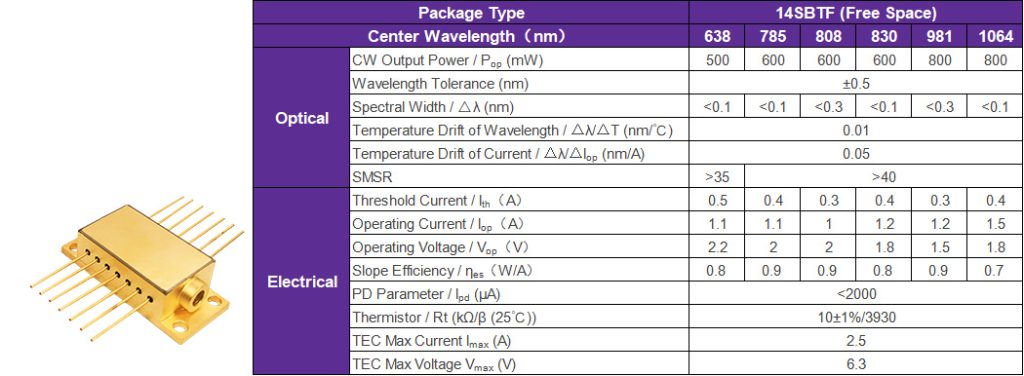
Free Space
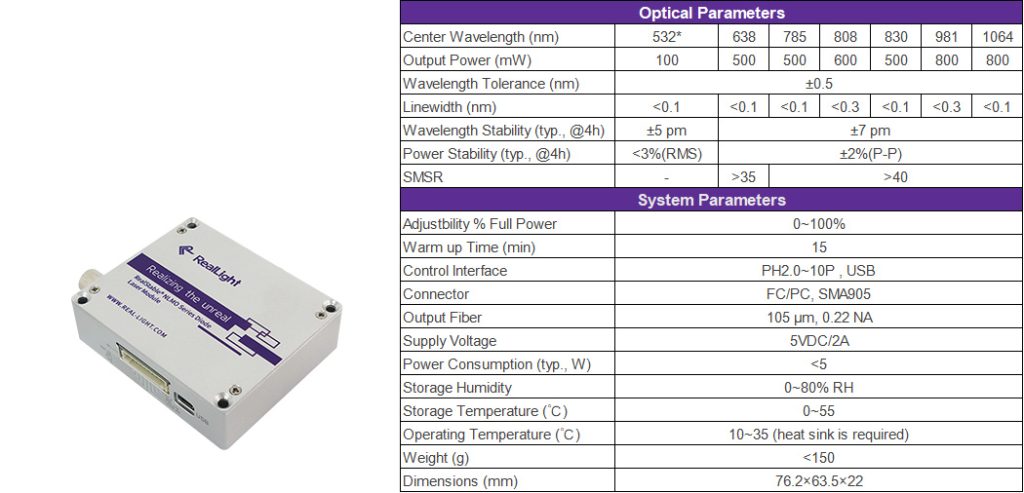
OEM modules with built-in driver circuits
Ready to use solution: Plug in and use laser system, simplifying system integration process and reducing usage threshold;
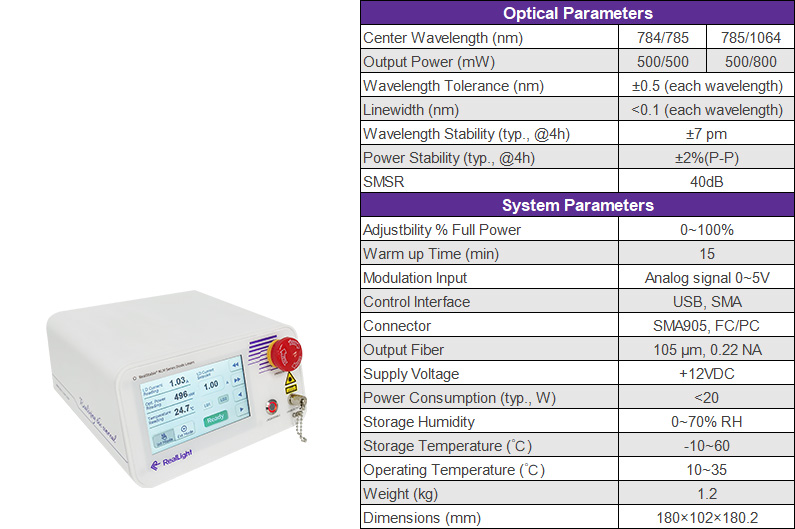
Dual-wavelength
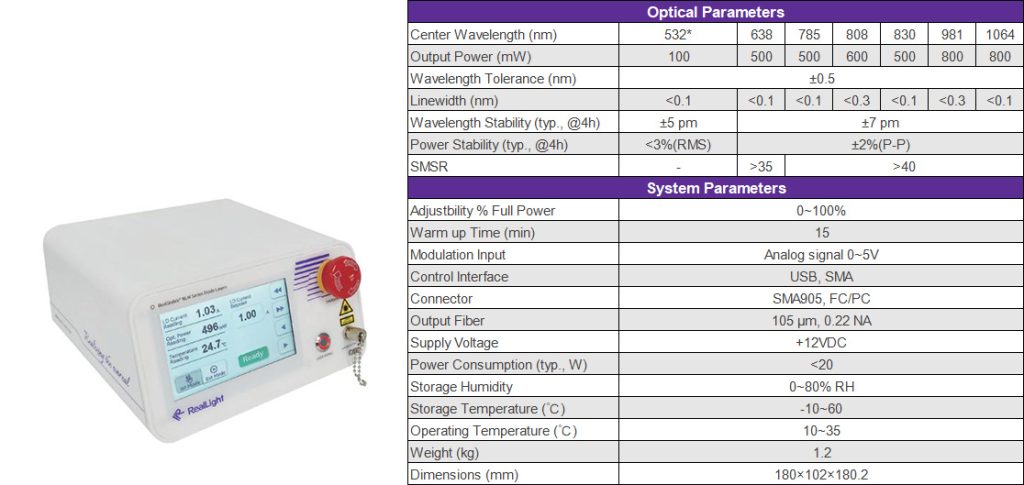
Single-wavelength
Supporting Raman probe: Provide Raman probes that match the wavelength of the laser to achieve efficient collection of “light signal”.
RealLight products are renowned for their stability, efficiency, and long lifespan, providing one-stop support for research institutions, industrial customers, and testing laboratories. We deeply understand that every precise beam of light is a key to exploring the unknown.
Contact RealLight immediately for professional consultation and customized solutions, and embark on a journey of exploring the microcosm together!
Disclaimer: Some content in this article is sourced from the internet for technical research and discussion purposes. It is intended for reference and learning only. Please kindly point out any inaccuracies. For copyright concerns, contact us for verification and removal.







 777
777 