
Visibility Light Quantum Lidar and Its Laser
The Importance of Visibility Monitoring and Early Equipment Limitations
In daily life, the level of visibility directly affects our travel safety. Whether it’s fog on highways, sea fog at ports, or low clouds on airport runways, these low visibility phenomena are significant threats to transportation. In order to measure visibility, laser visibility meters have emerged.
The early common visibility meters were single point type, which could only measure visibility in one dimension. Although the cost was low, the information was incomplete and the application was limited.
The working principle and advantages of visibility quantum lidar
With the development of technology, the visibility quantum lidar has been developed. It uses a laser to emit fixed wavelength laser pulses, which penetrate the atmosphere and undergo meter scattering with aerosols, water vapor, and haze particles. Through a telescope, it receives backscattered light at different distances, inverts the atmospheric extinction coefficient, and calculates visibility. By observing meteorological elements at the minute level, the range and data quality of atmospheric observations are improved, filling the limitations of traditional point based monitoring with visibility meters, thereby enhancing the monitoring and warning capabilities for sudden and catastrophic weather.
Interaction between Atmospheric Particles/Molecules and Laser – Scattering Types&Corresponding Lidar
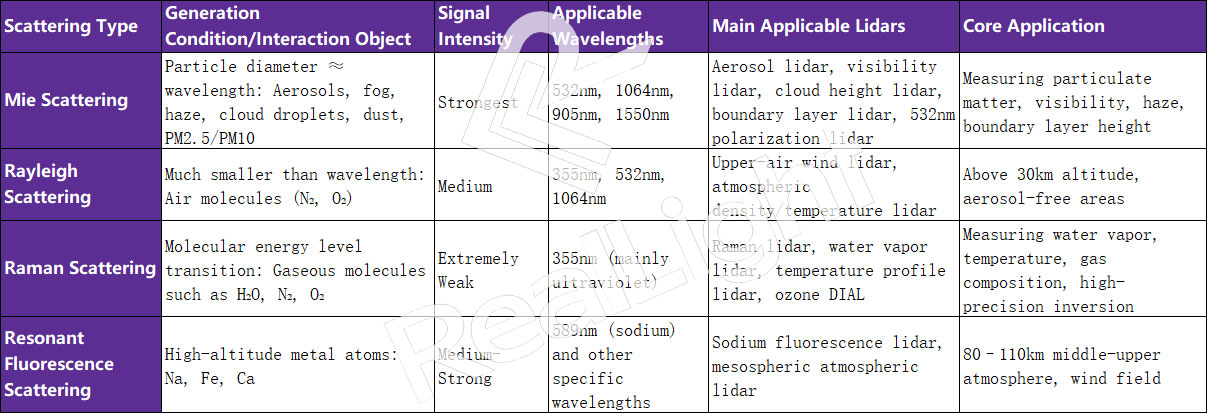
Core application scenarios
Based on the scanning observation results of three-dimensional visibility, identify low visibility coverage areas and issue low visibility warnings in a timely manner in combination with warning thresholds to ensure the safety of low altitude flight of aircraft in the surrounding areas of takeoff and landing points; Provide decision support for the flight “window period” of tourism and sightseeing based on real-time observation data, ensuring the visual experience of tourism and sightseeing; Provide visibility information along the flight path to ensure timely avoidance of obstacles and improve flight safety.
Laser technology iteration under the trend of miniaturization
With the development of low altitude economy, the demand for miniaturization is becoming increasingly urgent, which has led to the need for miniaturized visibility quantum lidar. After miniaturization, the volume is smaller, the cost is lower, and it is conducive to large-scale deployment. In the field of miniaturization technology, lasers are one of the key focuses. Traditional lamp pump lasers have long been eliminated and replaced by all solid state pulse lasers, which mostly use active Q-switching technology and require high-voltage circuits and active Q-crystals. Although the volume is relatively small compared to lamp pump lasers, it is not small enough for miniaturized laser radars. Therefore, at this point, the characteristics of the micro chip laser based on passive Q-switching technology began to emerge. The micro chip laser of RealLight is characterized by miniaturization, low power consumption, and narrow pulse width. As shown in the design schematic and physical diagram below, it can be made very compact, and the resonant cavity is very short, achieving narrow pulse width output.
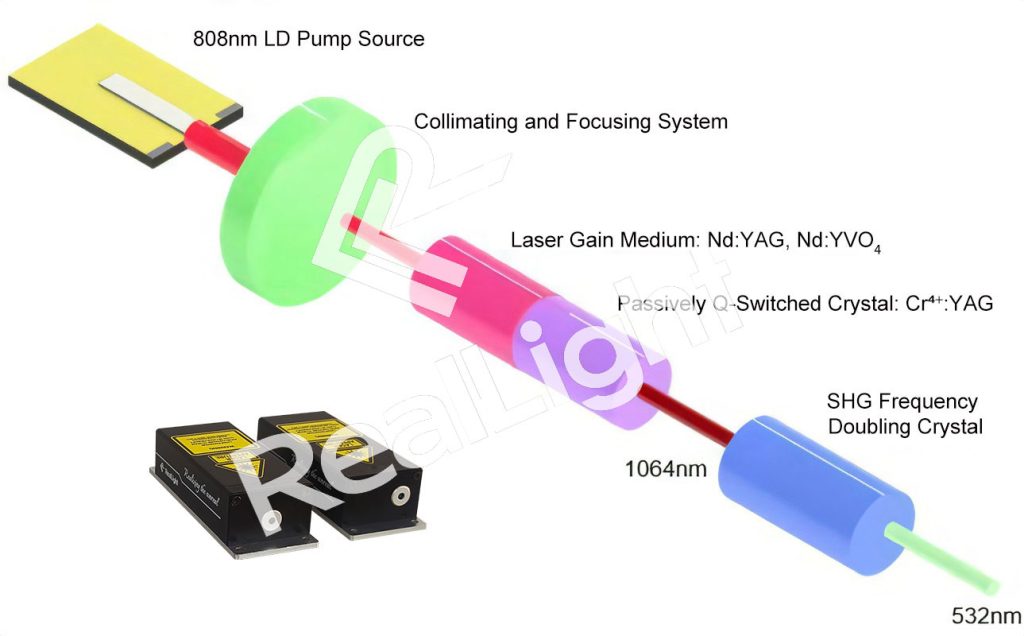
Working principle diagram of passive Q-switched microchip laser
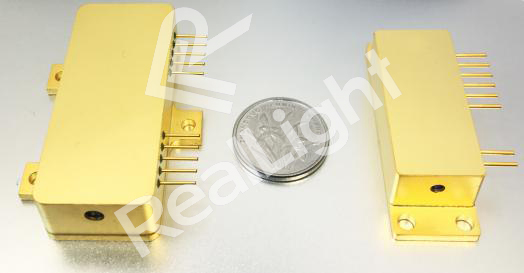
RealLight Passive Q-switched Microchip Laser
Compared to actively Q-switched lasers, the disadvantage of micro chip lasers is their lower average power. In the past, the measurement range of laser radar was over 5km, even up to 15km. Therefore, most of the time, actively Q-switched lasers were chosen to meet the measurement requirements. With the development of low altitude economy, the measurement range requirement is greater than 3km, and with the development of detection technology, the cost of single photon detectors continues to decrease. The advantages of lower average power micro chip lasers have become prominent and have been fully applied. In applications, the laser of RealLight is not only miniaturized, low-cost, and stable, but also benefits from miniaturization and low power consumption, which makes the heat dissipation requirements low and the radar system design simple; In addition, with a compact and reasonable structural design, the laser has significantly better directionality at high and low temperatures, especially in the headache inducing low-temperature directionality.
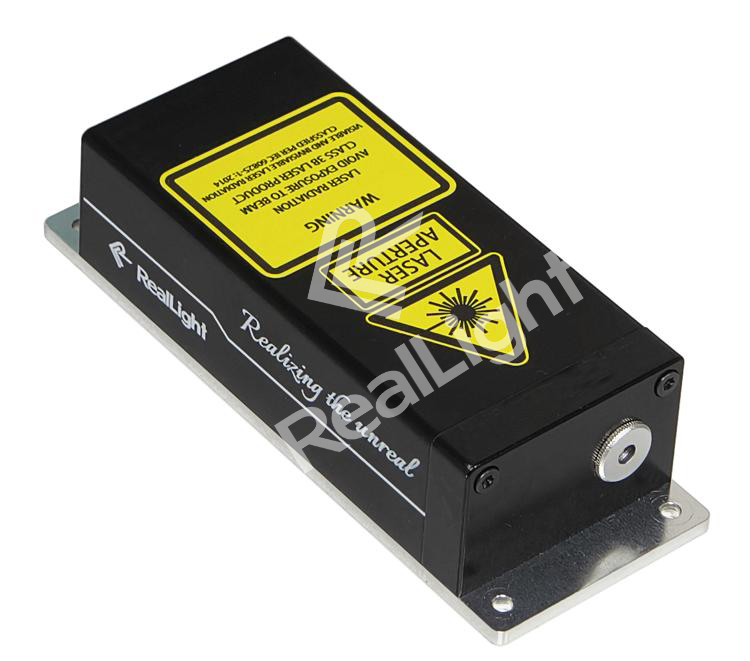
RealLight Microchip Laser
With the development of the low altitude economy, the miniaturization of laser radar will usher in a round of rapid development, and the high reliability, low cost, and miniaturization of RealLight‘s laser will assist in this round of development. Low altitude economy will facilitate people’s travel and improve pollution problems. Let’s look forward to it together.
Disclaimer: Some of the content in this article is sourced from the internet and is intended for technical research and exchange purposes only. It is for reference and learning purposes only. If there are any errors in the description or academic inaccuracies, please feel free to raise them in a timely manner. If there are copyright issues involved, please contact us to verify and delete as soon as possible.





 777
777