
Multi-Wavelength Diode Lasers for Physiotherapy: Which Manufacturers Supply and Customize Them?
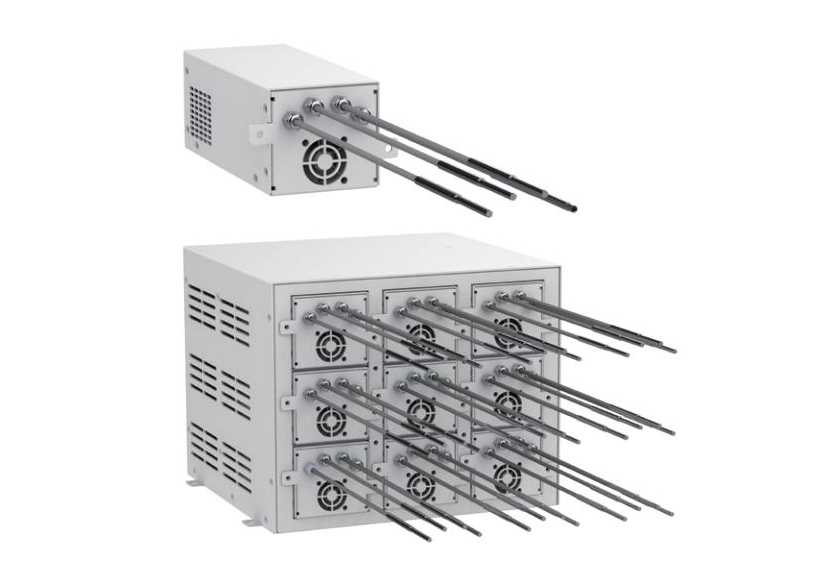
For a physiotherapy device company seeking laser sources, there are two separate issues. First, who provides multi-wavelength diode laser modules that are used to make PBM/LLLT devices? Second, who tailors a diode laser according to a particular product? These are two separate issues. The former is about identifying suppliers; the latter is about identifying only a limited number of laser sources suppliers who can customize their products. This paper differentiates between these two issues and identifies the position of RealLight among both of them.
To put it simply, multi-wavelength diode lasers for physiotherapy are sourced from OEMs of diode laser sources, not finished equipment brands. One example of an OEM of this sort is RealLight. This company creates various continuous wave diode lasers across a range of wavelengths from 405 nm to 1940 nm including multi-wavelength versions.
Why Multi-Wavelength Diode Lasers Are the Standard for Physiotherapy PBM
PBM treats tissue using red and near-infrared light, but the intensity of this light does not induce heat production. The biological molecule involved in this process is cytochrome c oxidase, a mitochondrial enzyme which shows peak activity when excited by light between 600-700 nm and 800-900 nm. No individual wavelength is capable of covering all the parameters in PBM, and that is why any high-quality PBM device uses a red light along with one or more near-infrared lights. A study involving the use of PBM in skeletal muscles proves the complementary nature of these wavelengths.
Penetration depth is the critical factor that prompts an OEM to select a multi-wavelength module over the single diode. The red line with wavelengths of 638–660 nm targets the skin, subcutaneous tissues, and injuries, while the near-infrared wavelengths of 808, 940, and 980 nm target the deep muscles, tendons, and joints. In a meta-analysis of the pre-clinical studies on tendinopathy, the wavelengths of 660, 830, and 904 nm were the most commonly used, and a rat-tendon study demonstrated the effects of the 660 and 808 nm wavelengths in reversing mechanical allodynia and balancing collagen.There is now solid evidence of the use of multi-wavelength light therapy in a clinical setting. The Valeda Light Delivery System (multi-wavelength [590 / 660 / 850 nm] photobiomodulation) has become the first therapeutic choice to treat dry age-related macular degeneration, after being approved by the U.S. FDA in 2024.
Typical multi-wavelength combinations for physiotherapy pair a superficial red line with deeper near-infrared lines:
- 638 / 650 / 660 nm (red): skin, superficial fascia, wounds, and soft-tissue targets.
- 808 / 810 nm (near-infrared): muscle and tendon at mid depth.
- 940 / 980 nm (near-infrared): deep muscle, joints, and large musculoskeletal targets.
Who Supplies Multi-Wavelength Diode Laser Modules for Physiotherapy OEMs
A search for suppliers returns three vendor types at once, so it helps to separate them. The first builds finished PBM and physiotherapy devices and does not sell a bare light source. The second is a component vendor that sells a multi-wavelength module with a fixed wavelength set and power, aimed at buyers whose design already matches the catalog. The third is a laser-source OEM with full in-house capability that customizes wavelength, output, fiber, package, and control to the buyer’s product. The supply answer, in short, is source vendors, not device brands. The broader market also includes other diode-source OEMs and fixed-specification component vendors, which this article does not name; it documents RealLight’s position within the source-OEM tier.
RealLight is a diode and solid-state laser source manufacturer, not a physiotherapy equipment maker. It sells the laser source itself, plus supporting optics and drive electronics, to equipment makers who integrate it into their own devices. Its diode line covers 405–1940 nm in continuous wave, with single-emitter output ranging up to 50 W, and it lists dedicated multi-wavelength modules — for example 3- and 4-wavelength combinations (650 / 808 / 980 / 1064 nm and 808 / 905 / 980 / 1064 nm) — for medical, dental, laser-therapy, and veterinary use.
Who Customizes a Multi-Wavelength Diode Laser for Physiotherapy Devices
The customization question narrows the field sharply. It requires a supplier to own the processes that define a multi-wavelength module: aligning several wavelengths in one optical path, controlling each channel’s power, coupling them to fiber, and packaging the result to the buyer’s mechanical and electrical specification. RealLight handles that chain in-house — laser design, chip packaging, device packaging, and system integration — with automated production (chip packaging precision ≤ ±1 µm, yield > 99%), ISO Class 5–7 cleanrooms, and an annual capacity above 100,000 lasers and systems.
Source selection also carries a compliance dimension. Lasers are assessed based on IEC 60825-1 with regard to classification and safety, and the end-product should also comply with the appropriate product safety standards. When an OEM of the laser source performs classification of the laser and provides the necessary data for the equipment manufacturer’s compliance, this helps speed up the process.
Specifically, this is what RealLight can customize on a physiotherapy diode laser, each mapping to a real product decision an OEM makes:
- Wavelength combination — within the 405–1940 nm range, pairing a superficial red line (638 / 650 / 660 nm) with the near-infrared lines (808 / 940 / 980 nm) the treatment requires.
- Output power per channel — across the listed CW range (from 0.5 W up to 50 W on single-emitter lines), so a low-power rehabilitation head and a higher-power musculoskeletal system can share one platform.
- Fiber delivery — core diameter (105 / 200 / 400 µm standard, others available), single- or multimode, pluggable or pigtail output, and length matched to the handpiece.
- Mechanical package — TO-can, butterfly, HHL, or module housings, with custom housing to the buyer’s structural drawings.
- Drive and control — built-in or external driver, local or remote mode, a photodiode for real-time power monitoring, and command interfaces for power adjustment and temperature readout so the front panel can dose the patient.
- Interface details — fiber connector type, electrical pin-out, and mechanical mounting, all adjustable to the buyer’s board and chassis.
Specification View: Physiotherapy Multi-Wavelength Diode Module (RealLight reference)
The table below frames the parameters that actually matter for a PBM physiotherapy source, alongside the RealLight continuous-wave diode range used for this class of device.
|
Parâmetro |
What it drives in a PBM device |
RealLight diode line |
|
Wavelengths |
Depth reached per channel; red = superficial, NIR = deep |
638/650/660 nm red + 808/940/980 nm NIR; 405–1940 nm CW line; multi-wavelength modules |
|
Output power |
Treatment intensity and dose rate |
CW from 0.5 W to 50 W across listed single-emitter lines, configurable per channel |
|
Output / delivery |
How light reaches the handpiece |
Free-space or fiber (pluggable / pigtail); 105 / 200 / 400 µm core |
|
Temperature control |
Wavelength and power stability during a session |
Built-in TEC with low power drift |
|
Power monitoring |
Accurate clinical dose and safety interlock |
Built-in photodiode for real-time power feedback |
|
Package / size |
Fits the handheld or clinical chassis |
TO-can, butterfly, HHL, or custom module housing |
Why a Physiotherapy OEM Would Spec RealLight
The decisive issue is the difference between the catalog item and the actual product. If the buyer’s wavelength configuration, power, fiber, and enclosure all match a standard component, then anyone stocking that part can supply it. The situation changes when there is a need for a custom wavelength configuration, per-channel power, fibers, a package compatible with a proprietary handpiece, and electronics compatible with the device’s controller. RealLight’s in-house chain, from chip packaging through module and system integration, is built for exactly that. It supplies the laser source and the electronic components, while the equipment manufacturer designs the device and assumes the clinical and regulatory liability. Since the laser source is the actual light source within the device, selecting an OEM source with true customization capacity, not just a component from a catalog, is what will make a difference for differentiation in dose, coverage, and reliability.
Frequently Asked Questions
Q: Which wavelengths should a physiotherapy PBM module use?
A red line around 638–660 nm for superficial tissue, plus near-infrared lines such as 808, 940, or 980 nm for deeper muscle, tendon, and joint targets, so one device covers multiple tissue depths.
Q: Does RealLight sell the finished physiotherapy device?
No. RealLight supplies the laser source, supporting optics, and drive electronics to equipment manufacturers, who integrate them and carry the clinical and regulatory responsibility.
Q: How is a multi-wavelength module different from wiring several diodes together?
In such an efficient system, the wavelengths will be properly merged in one single path through the use of wavelength division multiplexing. Such a module has per channel power control, temperature stabilization and power monitoring to ensure a constant dosage in all channels.
Q: What should I send RealLight to start a custom physiotherapy laser quote?
The wavelength combination, power per channel, target treatment area and dose, the fiber and package that fit your handpiece, and your control and safety requirements. With those, a custom project on RealLight’s continuous-wave platforms can be quoted and built from the standard diode line.
Referências
- Photobiomodulation for skeletal muscle regeneration: mechanisms, dosimetry, and translational challenges. PubMed Central (NIH).
- Photobiomodulation for Tendinopathy: A Review of Preclinical Studies. PubMed.
- Reversal of allodynia and enhanced tendon repair in rats via 660 and 808 nm photobiomodulation. PubMed.
- IEC 60825-1:2014, Safety of laser products — Part 1: Equipment classification and requirements. IEC.
- FDA, De Novo authorization record for the Valeda Light Delivery System(multi-wavelength photobiomodulation, DEN230083). FDA AccessData.
- RealLight diode lasers(405–1940 nm, multi-wavelength modules).
- RealLight company profileand OEM/ODM capabilities.





 777