News

  • Applications of Lasers in Photoacoustic and Fluorescence Imaging
    Applications of Lasers in Photoacoustic and Fluorescence Imaging
    May. 08, 2025
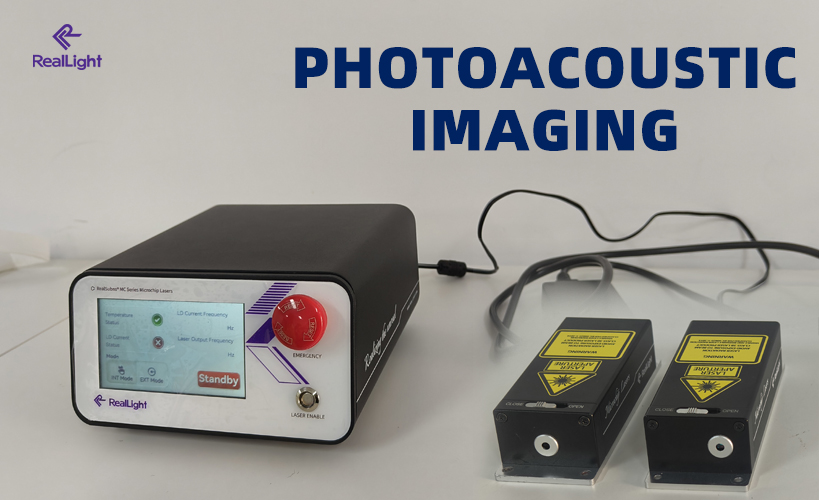
    This paper systematically elaborates on the innovative applications of laser technology in photoacoustic and fluorescence imaging. It highlights RealLight's sub-nanosecond microchip laser, which demonstrates unique advantages in biomedical imaging and materials science due to its excellent pulse stability (microjoule-level) and multi-wavelength output capabilities (532nm-213nm). In photoacoustic imaging, it enables non-invasive, high-resolution tissue imaging, while in fluorescence imaging, it serves as a reliable light source for two-photon microscopy. Research shows that such compact lasers not only advance imaging technologies but also play crucial roles in neuroscience research, drug delivery monitoring, and material defect detection, demonstrating broad potential for interdisciplinary applications.
  • The Application of Pulsed Lasers in Photoacoustic Imaging
    The Application of Pulsed Lasers in Photoacoustic Imaging
    Apr. 27, 2025
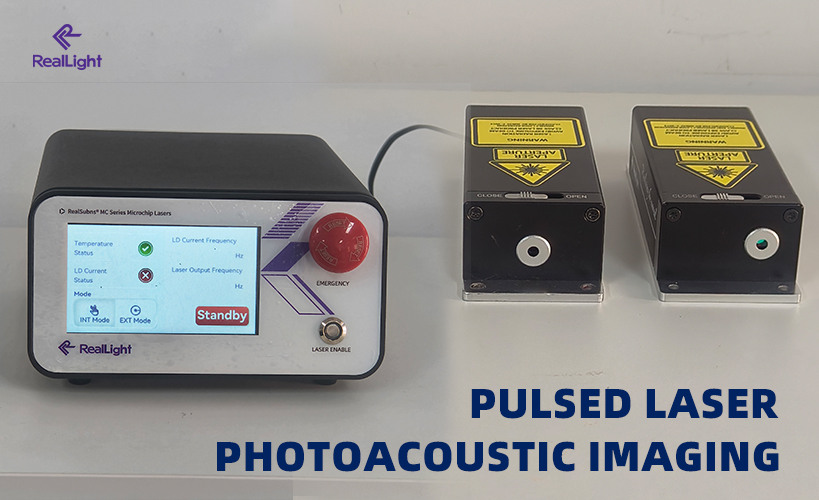
    Pulsed lasers serve as the core light source for photoacoustic imaging (PAI), enabling high-resolution and high-contrast biological tissue imaging due to their high peak power and ultrashort pulse characteristics. This article reviews the evolution of the photoacoustic effect from Bell's era to modern laser technology, with a focus on the advantages of pulsed lasers (e.g., Nd:YAG and microchip lasers) in vascular imaging, tumor detection, and brain science research. Studies show that the nanosecond-level short pulses and compact design of microchip lasers make portable PAI devices feasible. In the future, with advancements in laser technology and algorithms, the clinical applications of pulsed lasers in PAI will expand further.
  • The Application of Lasers in Photoacoustic Imaging
    The Application of Lasers in Photoacoustic Imaging
    Apr. 24, 2025
    Lasers are the core component of photoacoustic imaging (PAI), directly determining image quality. This article examines the operational principles of lasers in PAI, compares traditional nanosecond lasers (e.g., Nd:YAG/OPO) with modern compact lasers (e.g., RealLight’s MCA/MCC series), and analyzes how wavelength selection balances resolution and penetration depth. The study highlights that advancements in laser miniaturization and high repetition rates will further expand PAI’s applications in clinical diagnosis and biomedical research.
  • Application of Narrow-Linewidth Lasers in Raman Spectroscopy
    Application of Narrow-Linewidth Lasers in Raman Spectroscopy
    Apr. 14, 2025
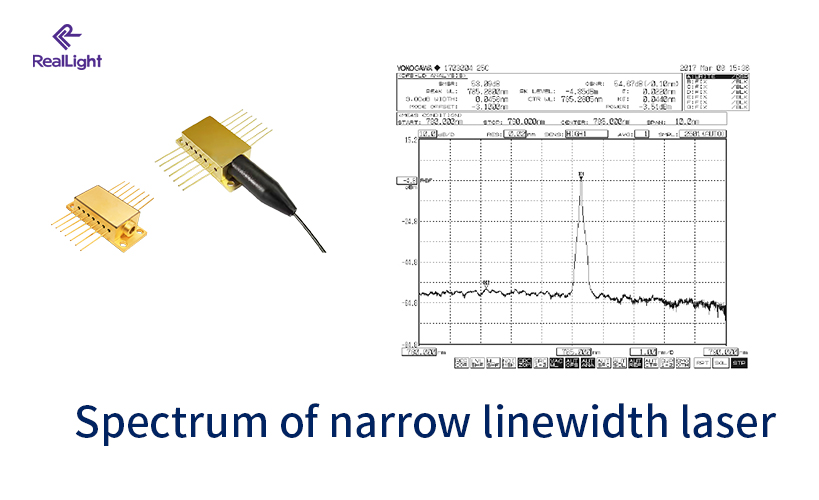
    Narrow-linewidth lasers significantly enhance Raman spectroscopy by providing high spectral purity, wavelength stability, and sufficient power, improving measurement accuracy and signal-to-noise ratio. These lasers enable high-resolution spectral analysis in biomedical diagnostics (e.g., cancer detection), pharmaceutical quality control, and material science. They are particularly valuable for low-wavenumber Raman measurements and high-resolution imaging, such as cellular and molecular mapping. With their ability to reduce background noise and support precise wavelength control, narrow-linewidth lasers expand Raman spectroscopy’s applications in research and industry. As technology advances, their adoption is expected to grow, driving innovations in scientific and medical diagnostics.
  • RealLight 1535nm Eye-Safe Laser – High-Performance Solution for Radar & Ranging
    RealLight 1535nm Eye-Safe Laser – High-Performance Solution for Radar & Ranging
    Apr. 07, 2025
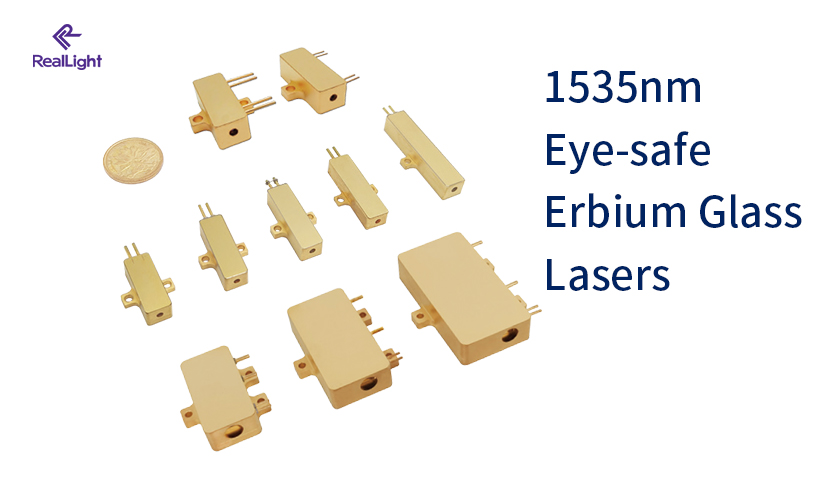
    RealLight’s 1535nm eye-safe laser is designed for radar and laser ranging, combining high performance with operational safety. Its wavelength meets eye safety standards, while its exceptional stability ensures reliable measurements in harsh environments. With competitive cost-efficiency, the laser reduces procurement and maintenance expenses through optimized manufacturing. Suitable for both (radar detection) and civilian (distance measurement) applications, the 1535nm laser delivers long-range, high-precision performance. A perfect blend of quality and affordability, it stands as an ideal choice for professional ranging solutions.
  • Application of Solid-State Lasers in LIBS
    Application of Solid-State Lasers in LIBS
    Apr. 01, 2025
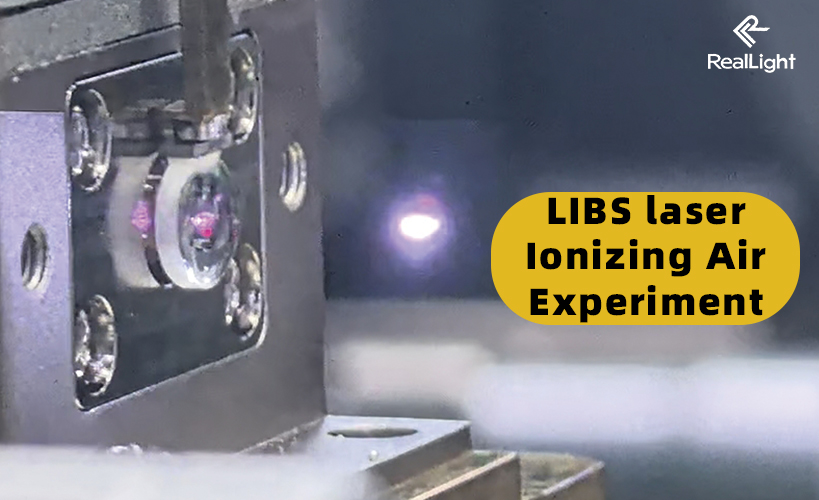
    Since its introduction in the 1960s, Laser-Induced Breakdown Spectroscopy (LIBS) has been widely applied in fields such as metal analysis, environmental monitoring, and cultural heritage identification. LIBS operates by using an ultrashort pulse laser to ablate a sample, generating plasma, and then analyzing its spectral emissions to determine elemental composition. The excitation source and spectral acquisition system are the core components of LIBS, with high peak power ultrashort pulse lasers being particularly crucial. RealLight has independently developed the PQE series solid-state lasers, which utilize passive Q-switching technology. These lasers feature high energy output, low power consumption, and a compact design, making them ideal for handheld, portable, and online LIBS systems, enhancing precision detection and analysis.
777