
LIBS: A Rising Star in Geological Exploration and Mineral Analysis
With the continuous maturation of LIBS technology, it has gradually demonstrated unique advantages and application value in the fields of geological exploration and mineral analysis. It is precisely because of its unique advantages in rapid in-situ, micro-damage and simultaneous multi-element analysis that laser-induced breakdown spectroscopy (LIBS) technology has begun to emerge in the process of geological exploration and mineral analysis. It has greatly improved the efficiency of the entire process from field exploration to ore sorting.
When conducting field work, it is usually hoped to obtain results immediately. The previous practice of sending geological samples back to the laboratory for analysis, which took several days, could no longer meet the demand for timely acquisition of geological information. The advent of portable LIBS analyzers has completely reversed this situation. By directly detecting rock walls, drill cores, or even a small piece of ore, the semi-quantitative or quantitative results of dozens of elements contained in the rock can be revealed within seconds. With this ability to perform “real-time” analysis, geologists can not only quickly identify areas with mineralization anomalies but also accurately delineate the boundaries of ore veins, quickly guiding subsequent exploration actions and significantly enhancing the overall effectiveness of mineral exploration.
In laboratory conditions, LIBS technology fully demonstrates its high-precision elemental distribution imaging capabilities. By scanning the laser-polished surface of a rock, the spatial distribution of elements within it can be clearly presented, with a resolution of 1-2 μm, and even deeper details of the rock’s internal structure can be revealed. Through its study, not only can the distribution of the ore be clarified, but also the characteristics of its co-occurrence can be understood, which is of great significance for the detailed analysis of ore structure. LIBS technology’s in-depth, anatomical description of the genesis of ore deposits and its support for the scientific design of mineral processing processes undoubtedly provide direct, reliable, and comprehensive data support for the study of the genesis of ore deposits.
At the same time, LIBS technology has also been widely applied in various processes such as mining and ore sorting in mines. By precisely analyzing the composition of ores on the conveyor belt in real time, it is possible to achieve online dynamic monitoring of ore grades and efficient and effective removal of waste rocks, thereby greatly improving the utilization rate of ore resources and economic benefits.
With the excellent real-time response capability and in-situ analysis ability of LIBS, the intelligence and efficiency of geological work have been greatly promoted, comprehensively advancing the modernization of geological work.
RealLight has been dedicated to the research, development, production, and sales of lasers about various types. The PQE high-energy solid-state laser is compact and lightweight, with an energy output of up to 10mJ. It offers an extremely high cost-performance ratio and is very suitable for use as a LIBS light source.
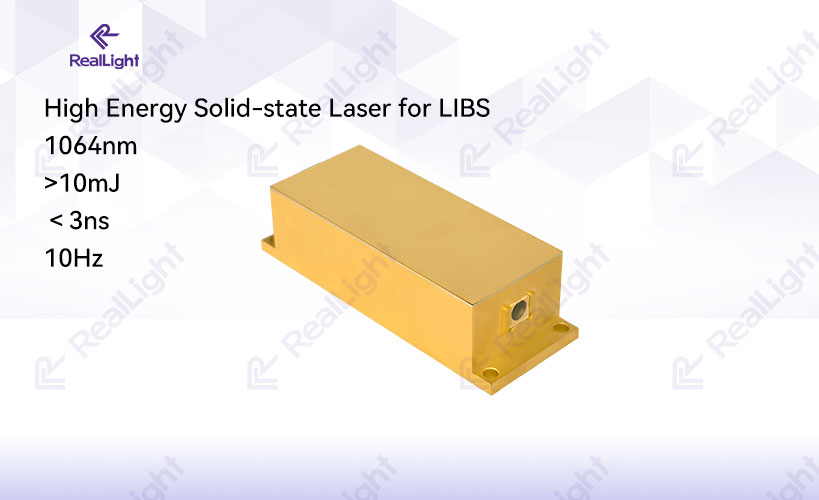
High Energy Solid-state Laser for LIBS, 1064nm, 10mJ, 3ns, 10Hz
We aspire to become your partner, leveraging laser technology to create value for you!
Disclaimer: Some content in this article is sourced from the internet. It is intended for technical research and exchange purposes, and is solely for your reference and learning. If there are any inaccuracies or academic errors in the description, please feel free to point them out promptly. If there are any copyright issues involved, please contact us and we will verify and remove them as soon as possible.





 777
777