
Microchip lasers used in micro-pulse lidar
Micro-Pulse Lidar (MPL) is a widely used atmospheric detection technology. It uses nanosecond-level laser pulses with high repetition frequency to achieve all-weather and high spatiotemporal resolution detection of aerosols and clouds. The resolution and response speed of traditional atmospheric detection technologies are relatively low, making it difficult to truly meet the demands for precise observation of near-ground and upper-air atmospheres. However, micro-pulse lidar technology can effectively make up for the shortcomings of traditional methods and has become a key equipment in the fields of meteorological forecasting, environmental protection, and scientific research in China. It provides important data support for addressing global climate and environmental challenges.
1. Technical architecture and working principle
Micro-pulse lidar is mainly composed of three core units working together: laser emission, optical reception and signal processing.
The laser emission unit adopts a pulsed laser with a high repetition rate, and its working wavelength is mainly 532nm. Some advanced systems also support a dual-wavelength configuration of 1064nm/532nm, enabling precise detection of different atmospheric components at various altitudes in the atmosphere.
The core of the optical receiving unit is a coaxial telescope and an avalanche photodiode (APD) detector. This combination can efficiently capture and convert the weak backscattered light signals produced by various atmospheric particles into usable electrical signals.
The signal processing unit relies on the principle of real-time flight time of the received signals to invert their parameters. Eventually, it can accurately analyze the vertical distribution of the concentration of particulate matter in the atmosphere, the optical properties of clouds, and so on.
The working principle of micro-pulse lidar relies on the interaction mechanism between laser and atmospheric components: After the laser pulse is emitted, it undergoes elastic scattering with aerosols, cloud particles, etc. in the atmosphere. The system precisely measures the time of return (ToF) of the scattered photons and the corresponding intensity changes. Combined with Mie’s scattering theory model, it inverts core parameters such as the optical thickness, extinction coefficient, and backscattering coefficient of the atmosphere. Thus, dynamic monitoring and quantitative analysis of the state of the atmosphere have been achieved.
2. Application Practice and Core advantages
Micro-pulse lidar has demonstrated outstanding application value in multiple fields:
In the field of environmental monitoring, based on high-precision and high-resolution monitoring of the environment, micro-pulse lidar provides a scientific basis for environmental governance, assists in gradually eliminating pollution in the environment, and achieves sustainable environmental governance.
In the field of atmospheric chemistry research, by organically combining micro-pulse lidar with differential absorption spectroscopy technology, not only can the concentration data of major gases such as NO₂ and O₃ be obtained simultaneously, but also the generation and transmission of haze have been revealed in a relatively in-depth manner. This has a significant promoting effect on the refined research of the causes of air pollution.
In terms of aviation safety guarantee, based on the complete connection means with the airport, the high-precision and long-distance weather monitoring results of the micro-pulse lidar are fed back to the airport’s dispatching and command center in real time, thereby providing the most reliable meteorological early warning for the takeoff and landing of flights, and effectively providing a strong guarantee for the safe operation of aviation.
The micro-pulse lidar system has the following advantages:
– High-resolution detection: With a vertical resolution of up to 15 meters, the multi-wavelength design can effectively distinguish between sand and dust and pollution particles.
– It can conduct continuous observation throughout the day: It can monitor the vertical structure changes of atmospheric aerosols and clouds 24/7 without interruption, which is crucial for studying the diurnal variations of the atmospheric boundary layer, the formation and dissipation of pollution processes, and the diurnal evolution of clouds.
– System integration: Miniaturized design of core components enables rapid deployment in multiple scenarios.
3. Core Light Source -Nd: YAG Solid-State Laser
The MCA-R series micro-chip lasers independently developed by RealLight can be used in micro-pulse laser radars. This series of microchip lasers adopts passive Q-switching technology combined with diode-pumped solid-state laser design, integrating the pump module with the laser crystal, providing two wavelengths of 1064nm and 532nm, and the output laser pulse width is as short as 2ns with a repetition rate of 2.5kHz. This diode-pumped solid-state laser, equipped with a miniaturized drive circuit, achieves a compact structure and stable performance, meeting the requirements of miniaturized design and multi-scenario application of MPL systems.
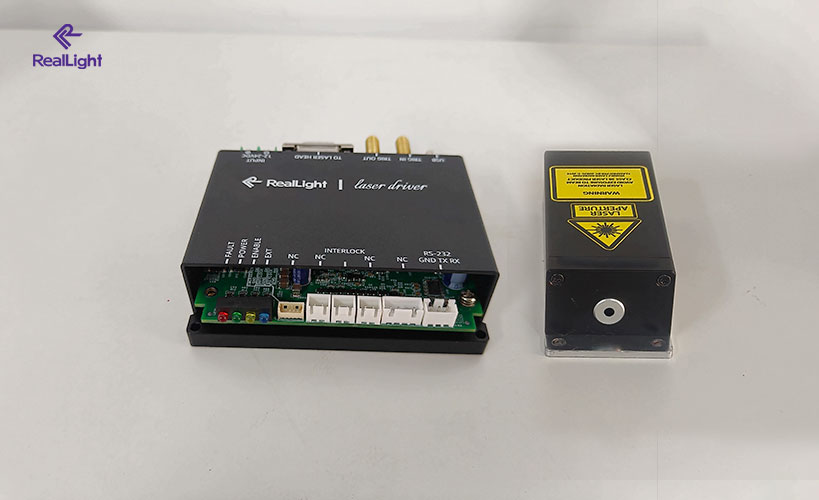
Microchip lasers used in micro-pulse lidar
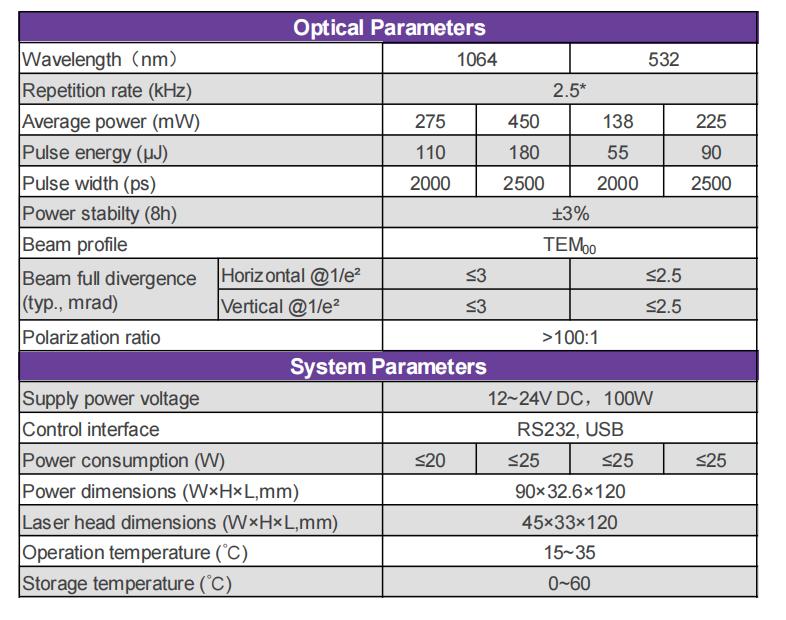
Microchip lasers used in micro-pulse lidar
For more product details, please contact the sales staff of RealLight!
Disclaimer: Some content in this article is sourced from the internet for technical research and discussion purposes. It is intended for reference and learning only. Please kindly point out any inaccuracies. For copyright concerns, contact us for verification and removal.







 777
777