
The Development of Miniaturized Laser Particulate Matter Radars and the Selection of Lasers
With the “eagle eye” vision of laser particulate matter radars, how to more accurately “see” and precisely track the fine dust in the air has become a highly challenging task. As this field continues to develop, the traditional “eagle eyes” that could only be stationed at large fixed sites have gradually been replaced by a series of small, flexible, and intelligent “new eagle eyes”. The true core of this miniaturization wave of lasers lies not only in the rapid development of precise optical technology but also in the rapid development of electronic integration technology, especially the critical choice of the “heart” – the pursuit of laser miniaturization.
Miniaturization: From “Fixed Giant Eyes” to “Portable Wise Eyes”
Due to the large size of the traditional laser particulate matter radar’s transmission and reception systems, which brings high power consumption and large equipment volume, they are often fixed on the rooftops of monitoring stations or high towers and other immovable places. This poses high requirements for their mobility and portability. With the continuous diversification and dynamic nature of modern environmental monitoring needs, the development of low-altitude economy, and the increasing demand for urban pollution monitoring to be conducted in a dense grid pattern to draw more detailed pollution maps, as well as the urgent need for emergency monitoring to be deployed quickly at pollution sites, the continuous miniaturization of radars has become an inevitable trend in their development.
With continuous innovations in optical systems, such as transforming the traditional non-coaxial optical path into a more compact coaxial or quasi-coaxial optical path, the size of the equipment has been significantly reduced, bringing new opportunities as well as new challenges. Integrating discrete detectors, amplifiers, and other components onto a single microchip has also brought new possibilities. Moreover, by enhancing with advanced algorithms, the potential performance losses due to miniaturization can be well compensated, and real-time data processing and cloud transmission can be achieved. The advent of handheld or backpack-sized particulate matter radars has quietly replaced the original “fixed giant eyes” with “portable wise eyes”.
“Heart” Selection: Weighing Laser Technology Routes
With the continuous pursuit of miniaturization, the selection of lasers has become the key to determining the performance, cost, and reliability of the equipment. The characteristics of the laser output by the laser, like a “heart”, directly determine the accuracy of detection, the controllability of detection distance, and the sensitivity to the target. As miniaturization progresses, both semiconductor lasers and solid-state lasers (especially the emerging microchip lasers) have shown their unique advantages and challenges in the miniaturization race.
The wide application of semiconductor lasers, such as edge-emitting EEL and surface-emitting VCSEL, with their small size, high electro-optical conversion efficiency, ease of modulation, long lifespan, and relatively low cost, makes them the “natural allies” of radars. Especially VCSEL lasers, with their superior beam quality and ease of integration, are highly suitable for current compact designs. However, due to their relatively limited output power, narrow wavelength selection range (especially in the detection of specific aerosol components), and beam quality that usually cannot compare with solid-state lasers, they are particularly suitable for short-distance, high-density grid monitoring of conventional pollutants or applications in consumer-grade sensing devices. Solid-state lasers, with their high peak pulse power, excellent beam quality, and stable wavelength output, offer advantages such as longer detection distances and higher signal-to-noise ratios, making them particularly suitable for high-tech applications such as long-distance remote sensing or high-precision monitoring in scientific research. However, their traditional form is bulky and power-hungry, severely limiting their wide application in practical scenarios. With the maturation of microchip laser technology, the development of radar miniaturization has gradually accelerated. By integrating the medium, Q-switching elements, and other components into a millimeter-scale chip, not only are the high performance characteristics of solid-state lasers retained, but also a revolutionary miniaturization is achieved, with a volume comparable to that of semiconductor lasers. Although their current cost is still high and their electrical-to-optical efficiency is slightly lower, their overall performance is significantly superior to that of semiconductor lasers, making them an ideal choice for high-end portable, airborne/vehicle-mounted radars.
By adopting forward-looking planning and in-depth future outlooks on technology, we can better grasp the development direction of technology and better point out the direction for future technological breakthroughs. Only by comparing the performance of detection (especially the maximum detectable distance, target sensitivity, and minimum achievable resolution, etc.) with the size and power consumption of the equipment can a reasonable choice be made for the ultimate application scenarios (such as object identification, measurement, tracking, and monitoring, etc.) it can achieve. Currently, semiconductor lasers have dominated the mainstream in mid-to-low-end large-scale miniaturized applications, while microchip solid-state lasers have gradually and rapidly penetrated into high-end and highly demanding mobile platforms and scientific research fields.
With the continuous development and miniaturization of microchip lasers, the application of laser particle matter radars will also witness a vigorous development. As laser particle matter radars continue to miniaturize, from the initial large-scale fixed-site devices to today’s portable mobile grids, our perception of the air environment has quietly transformed from one-dimensional static perception to three-dimensional dynamic perception. In this silent “slimming” process that brings the “finishing touch”, our continuous technological advancements are opening up a clearer and more agile path to safeguard the indispensable space between each of our breaths.
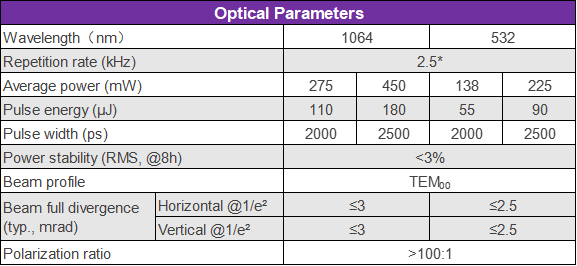
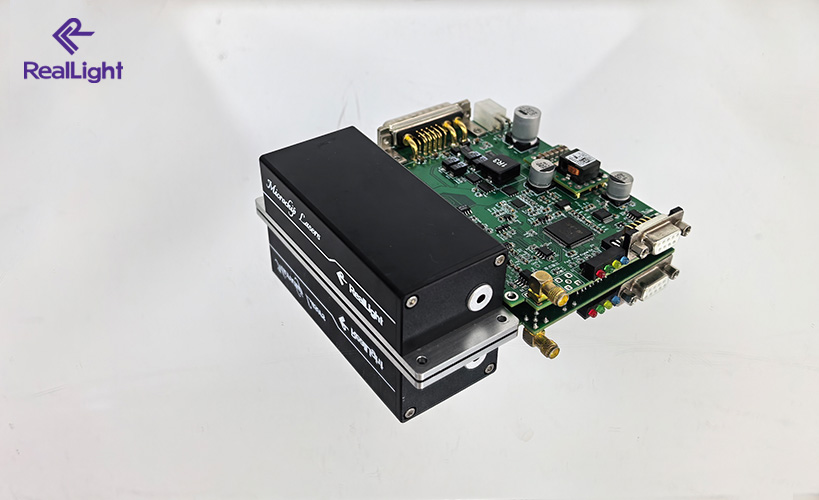
Based on the urgent demand for high-performance core light sources in miniaturized LiDAR, RealLight‘s MCA-R series 2ns microchip laser is an ideal choice for high-end mobile monitoring platforms due to its high peak power and compact size. The detailed parameters are shown in the following figure.
Disclaimer: Some content in this article is sourced from the internet for technical research and discussion purposes. It is intended for reference and learning only. Please kindly point out any inaccuracies. For copyright concerns, contact us for verification and removal.







 777
777