HQF Series Lamp-pumped Picosecond Laser with Built-in Energy Detector
RealShock® HQF Series Lamp-Pumped Picosecond Laser with Built-in Energy Detector Product Introduction
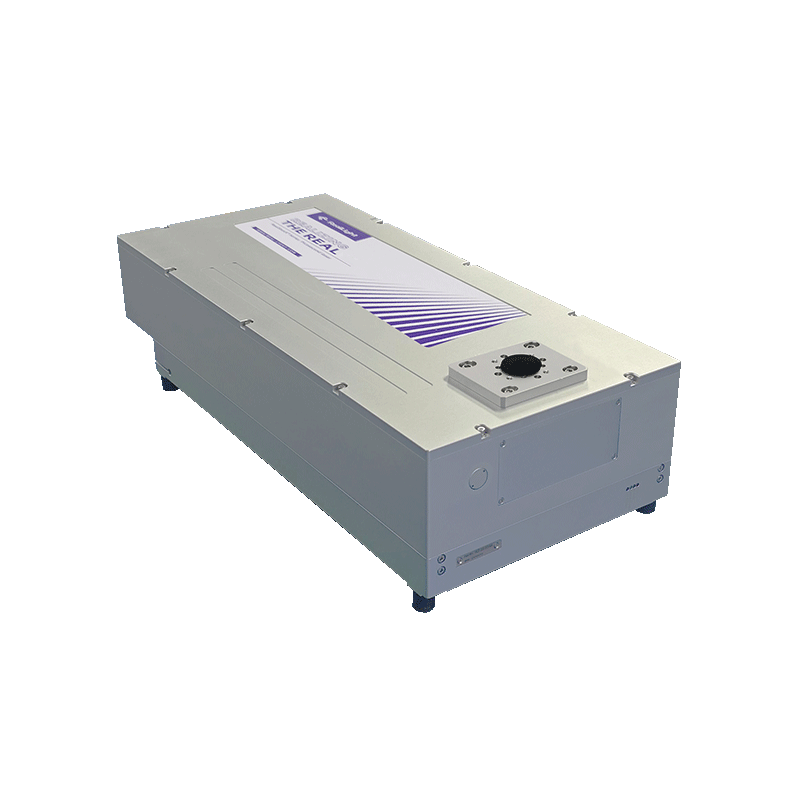
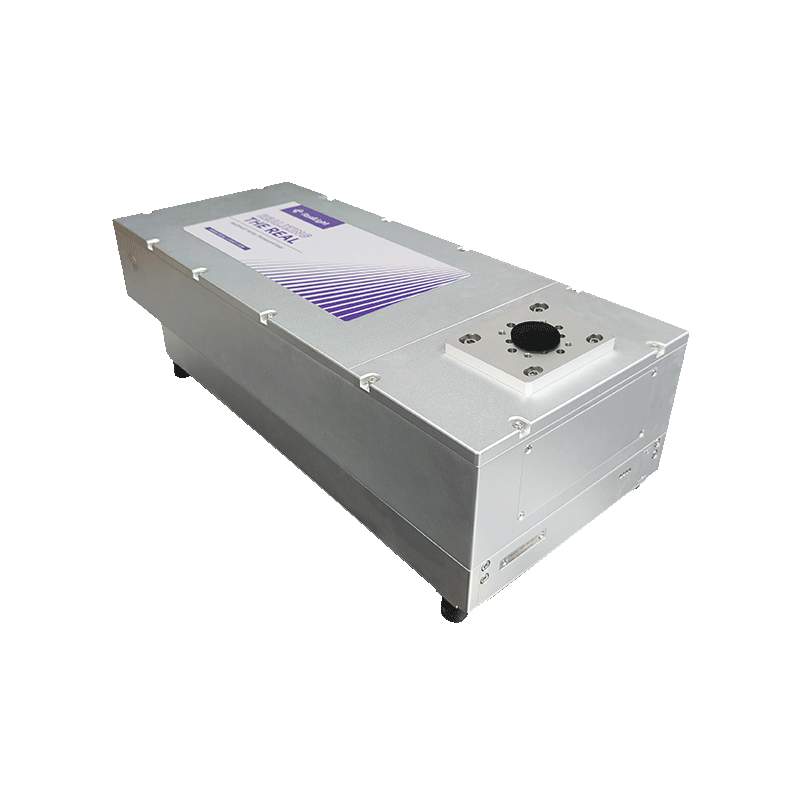
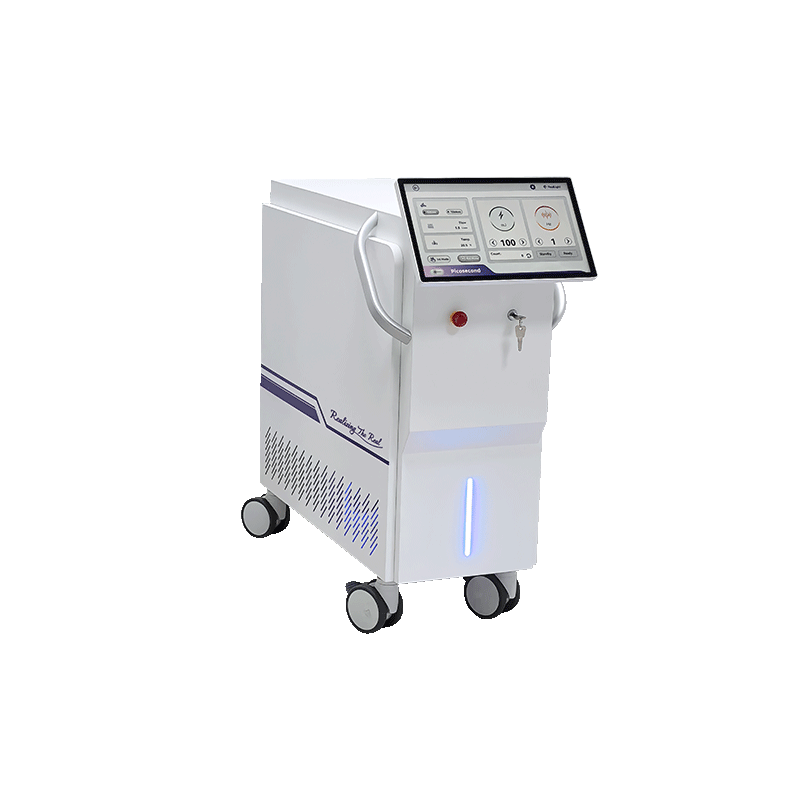
RealLight Technology launches the RealShock® HQF Series Lamp-Pumped Picosecond Laser with Built-in Energy Detector, a high-energy solid-state picosecond laser source adopting a dual-lamp dual-rod amplification architecture. The complete system integrates self-developed MC series microchip seed laser, RL-ISO optical isolator and high-power lamp-pumped amplification module. Equipped with a factory-fitted built-in optical shutter and real-time energy detector, it eliminates the need for additional external testing equipment. Balancing integration level, stability and operational safety, this domestically-manufactured high-energy picosecond laser solution serves biomedicine, precision detection, spectral scientific research and many other scenarios.
1. Overall Structure & Core Design Highlights
This laser adopts a dual-lamp dual-rod optical amplification layout. Compared with single-lamp schemes, it delivers higher maximum pulse energy output, more balanced heat distribution and lower performance attenuation during long-term continuous operation. The entire optical path is hermetically sealed to isolate interference from dust, moisture and temperature fluctuations, greatly extending the service life of optical components.
The product’s most distinctive advantage lies in the integrated combination of built-in energy detector and safety optical shutter. The energy detector captures real-time pulse output energy and transmits feedback data to the matched control screen, enabling operators to monitor and calibrate output parameters on the spot. It perfectly fits high-standard scenarios including standardized aesthetic treatment and quantitative scientific experiments. The built-in optical shutter rapidly cuts off laser output to avoid accidental light emission risks and raise overall operational safety.
A full range of optional supporting components is available, including medical articulated arms, touch control panels, dedicated drive power supplies and recirculating water chillers. The modular structure allows rapid integration into aesthetic equipment, scientific test platforms and industrial inspection instruments for easy on-site deployment.
2. Core Performance Advantages
1. Ultra-high Single Pulse Energy & Peak Power
The laser provides dual-wavelength output at 1064nm fundamental frequency and 532nm frequency-doubled band. The maximum single pulse energy reaches 500mJ at 1064nm and 250mJ at 532nm, with a peak power up to 1.5GW. The repetition rate is continuously adjustable from 1Hz to 10Hz to switch pulse emission frequency according to treatment and experimental demands. Its high-energy output is ideal for tissue ablation, long-distance laser detection, spectral excitation and other working conditions.
2. 300ps Narrow Picosecond Pulse Width for Minimal Thermal Damage
The fixed pulse width (FWHM) of 300ps falls within standard picosecond range. Compared with traditional nanosecond lasers, it delivers a smaller thermal conduction range. In aesthetic applications, it accurately shatters pigment particles while reducing burns to surrounding normal skin. For scientific experiments, it achieves material interaction with negligible thermal damage to guarantee pure experimental data.
3. Uniform Flat-top Beam & Highly Stable Output
It features a flat-top beam profile with a beam diameter of approximately 11mm. The full-angle divergence angle at 1/e² in both horizontal and vertical directions is less than 3mrad, delivering outstanding beam uniformity without local over-energy hotspots. Energy stability is excellent: RMS fluctuation is less than 2% at 1064nm and less than 3% at 532nm, ensuring consistent output during long-hour operation for unified aesthetic treatment effects and highly repeatable scientific data. The laser features vertical polarization, compatible with most mainstream optical system docking standards.
4. Wide Power Compatibility & Loose Operating Environment Requirements
It supports 110V/220V ±10% AC mains power and adapts to global 50/60Hz power grids. The total power consumption is below 800W for controllable energy costs. The laser stably operates within an ambient temperature range of 18°C to 35°C with relative humidity below 75%. No strict constant temperature & humidity renovation is required for conventional aesthetic clinics, laboratories and industrial workshops, cutting overall deployment costs.
3. Full Technical Parameter Description
All models of the HQF Series picosecond laser with built-in energy detector support dual-wavelength output of 1064nm and 532nm, with repetition rate adjustable from 1Hz to 10Hz. The maximum pulse energy is 500mJ at 1064nm and 250mJ at 532nm; RMS energy stability is less than 2% for 1064nm and less than 3% for 532nm. The unified pulse width is 300ps. All beam parameters are consistent across the series: beam diameter around 11mm, flat-top beam distribution, full-angle divergence angle below 3mrad in horizontal and vertical directions, and vertical laser polarization.
Electrically, it accepts wide-range AC input with total power consumption not exceeding 800W. The applicable operating temperature ranges from 18°C to 35°C, with ambient relative humidity controlled within 75%. Equipped with an integrated optical shutter and energy detection module, it eliminates extra external testing optical paths for a more streamlined system integration.
4. Diverse Application Fields
4.1 Biomedicine (Core Application)
As the core light source for aesthetic laser devices, it is widely applied in tattoo removal, elimination of freckles, age spots, chloasma, café-au-lait spots and other pigment lesions, as well as skin rejuvenation, acne scar repair and epidermal nevus removal. The 300ps narrow picosecond pulse paired with uniform flat-top beam brings minimal thermal damage and fast postoperative recovery. Real-time built-in energy detection enables standardized control of pulse energy for consistent treatment results regardless of operators. It also supports clinical research on tissue ablation and optical study of biological tissues.
4.2 Industrial Detection & Measurement
It is applicable to laser ranging, differential absorption lidar, particle image velocimetry (PIV), laser ultrasonic measurement and other industrial inspection equipment. High-energy pulses guarantee high precision in long-distance detection, while stable output improves the credibility of measured data.
4.3 Optical Scientific Research
It covers laser-induced breakdown spectroscopy (LIBS), laser-induced fluorescence, nonlinear optical experiments and other research directions. The real-time energy detection function enables precise quantification of input laser energy, meeting stringent requirements for parameter controllability in spectral analysis, material mechanism research and optical dynamics experiments.
5. Product Summary
Equipped with dual-lamp dual-rod high-energy amplification structure, 300ps narrow picosecond pulse width and uniform flat-top beam, the RealShock® HQF Series Lamp-Pumped Picosecond Laser with Built-in Energy Detector achieves all-round upgrades in output accuracy, operational safety and integration convenience via its industry-leading built-in energy detector and safety optical shutter.
With dual-wavelength, high-energy and ultra-stable output characteristics, it satisfies mass production demands of standardized aesthetic equipment as well as quantitative experiment and precision detection scenarios for universities, research institutes and industrial inspection enterprises. Featuring compact hermetically-sealed structure, complete supporting accessories and low environmental adaptation thresholds, this cost-effective domestically-produced high-energy picosecond light source serves as an ideal alternative to imported counterparts, perfectly matching projects including aesthetic equipment integration, laboratory construction and industrial inspection system development.
The HQF series picosecond dual-lamp dual-rod solid-state laser consists of an MC-series microchip laser, an RL-iso series isolator, and a lamp-pumped laser amplifier, featuring a built-in optical shutter and energy detector. This product series offers high energy, narrow pulse width, excellent stability, and uniform beam quality. With wavelengths covering 1064 nm and 532 nm, it is widely applicable in the biomedical industry for tattoo removal, pigment removal, skin rejuvenation, and more. Accessories including articulated arm, control screen, power supply and water cooler are available.
APPLICATION
-
Laser ranging
-
Biomedical applications
-
Differential absorption lidar
-
Particle image velocimetry (PIV)
-
Laser shock processing (LSP)
-
Laser-induced breakdown spectroscopy (LIBS)
-
Laser-based ultrasound detection
-
Laser-induced fluorescence (LIF)
-
Tissue ablation
-
Non-linear optics
KEY FEATURES
-
Single pulse energy up to 500mJ
/
-
Peak power up to 1.5GW
/
-
Repetition rate up to 10Hz
/
-
Excellent beam homogeneity
/
-
Great stability
/
-
Compact design, sealed package, high reliability
/
PRODUCT PARAMETERS
| Wavelength (nm) |
1064 / 532 |
| Repetition rate (Hz) |
1~10 |
| Pulse energy (mJ) |
500mJ@1064nm, 250mJ@532nm |
| Energy stability RMS |
<2%@1064nm, <3%@532nm |
| Other parameters |
| Pulse width FWHM (ps) |
300 |
| Beam full divergence (typ., mrad) |
Horizontal @1/e² |
<3 |
| Vertical @1/e² |
<3 |
| Beam diameter (mm) |
~11 |
| Spatial profile |
Top hat |
| Polarization direction |
Vertical |
| Electrical supply |
220V/110V±10%AC, 50/60Hz |
| Power consumption |
<800W |
| Environment requirements |
temperature 18~35℃, humidity <75% |
1. All the data in the above table are the typical values obtained from the tests at room temperature of 25℃, and the final data is subject to the final test report.
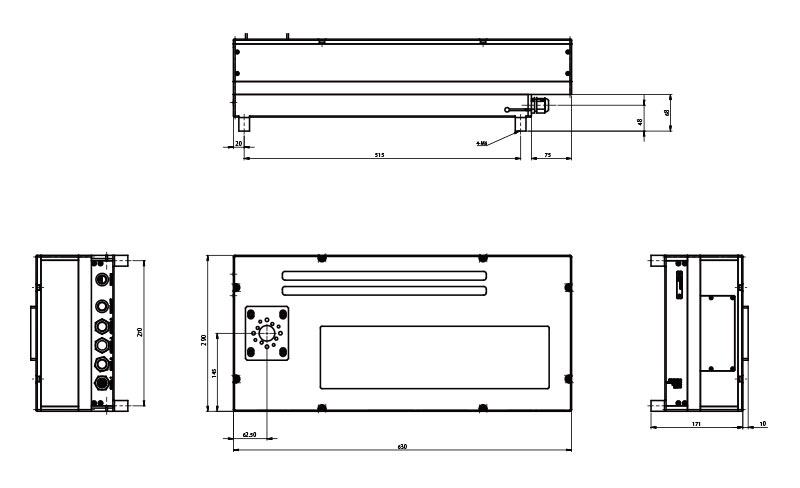
Mechanical Drawings (Unit: mm)
HQF Picosecond Laser Size Diagram

 MCD Series 350ps Low Repetition Rate OEM Microchip Laser 1064nm1064nm





 777
777