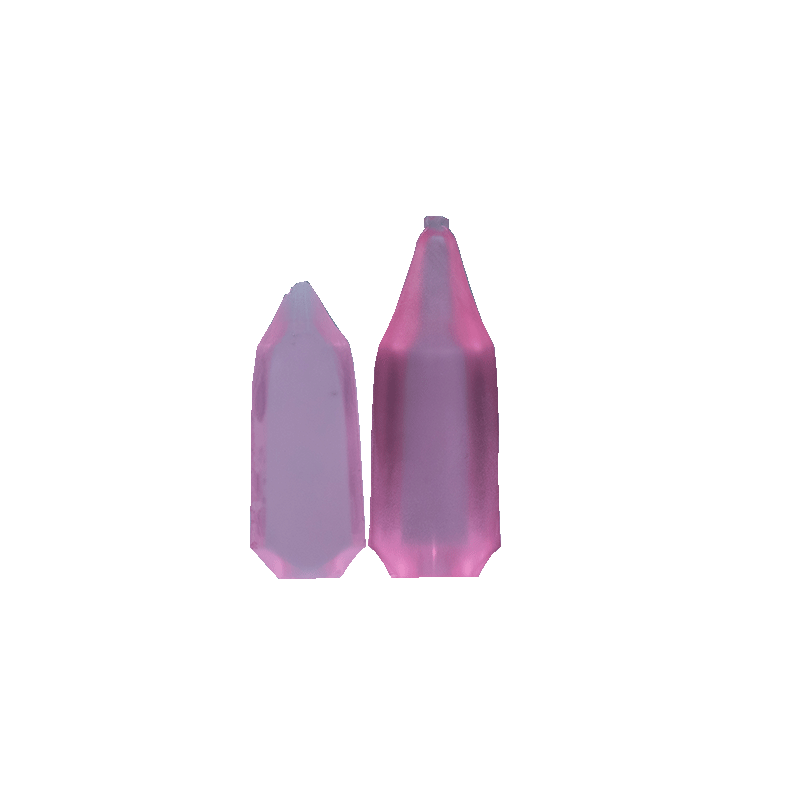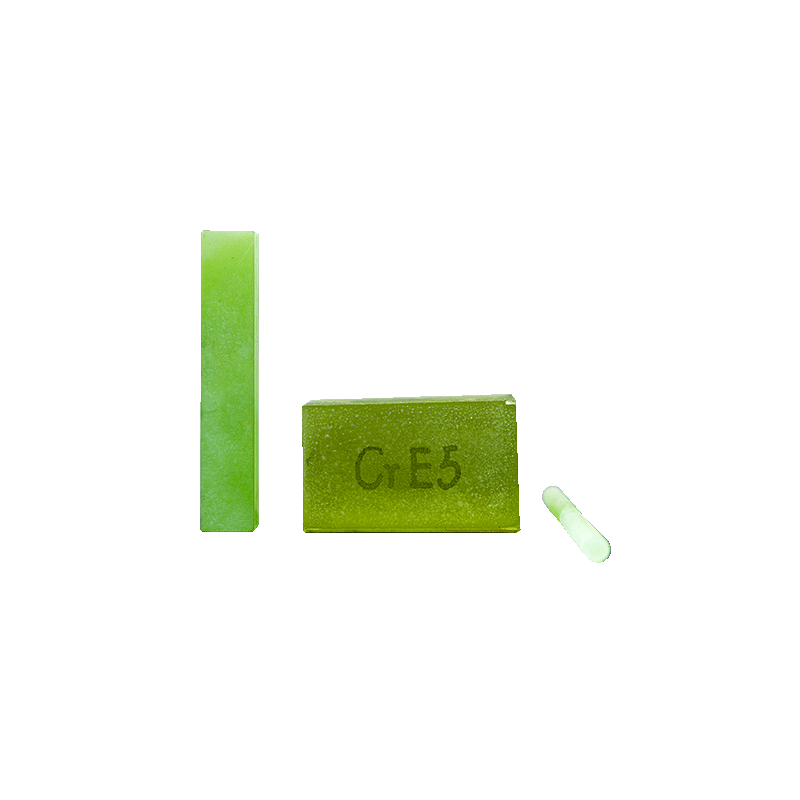
Laser Crystal Ti:Sapphire


Ti:sapphire crystal product, also known as titanium doped sapphire crystal, with the chemical formula of Ti3+:Al2 O3 , is a transition metal doped laser crystal with good comprehensive performance.

As an optically pumped solid-state laser crystal, Ti doped sapphire is widely used in wavelength tunable lasers. The tunable range is 650-1100nm and the peak value is 800nm. It is the widest wavelength tunable laser crystal.
Ti3+ ions have very large gain bandwidth, which opens the possibility of obtaining very wide wavelength tunability in short pulse lasers. The upper state lifetime of Ti:sapphire is as short as 3.2 μs. Because of its high saturated power, it is generally used as a lamp, an argon ion laser or a frequency double pumped Nd:YAG laser. Using self mode locking technology, Ti:sapphire laser can directly output laser pulses with a pulse width of less than 6.5 fs, which is the narrowest laser pulse of all lasers directly output from the resonator. Through the dual frequency technology, the wavelength of the laser beam can cover the wide band from blue to deep UV. The 193nm laser produced has been used in the lithography machine.
The product has the characteristics of short service life and high saturation power. It can be used in lamps, argon ion lasers or frequency double pumped Nd:YAG lasers.
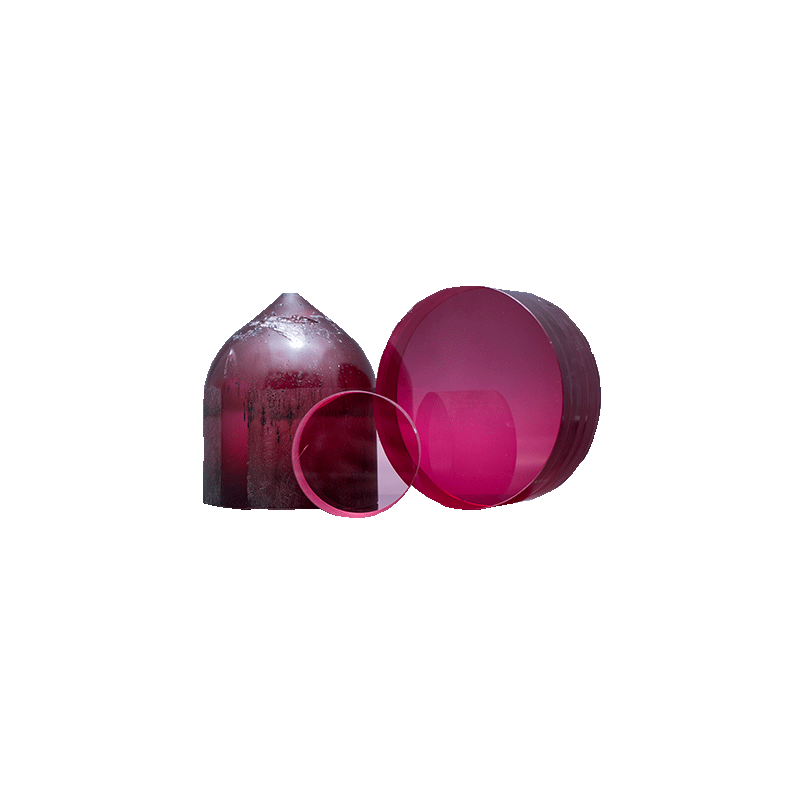
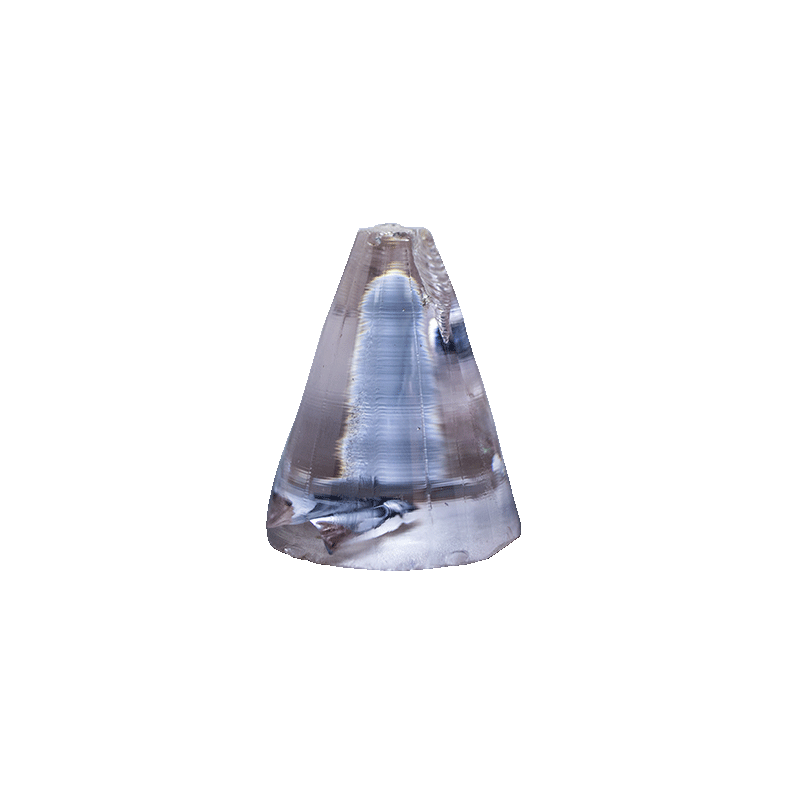
Laser Crystal Ti:Sapphire
APPLICATION

  • Ti:sapphire amplifier

  • Ti:sapphire tunable laser
  • Femtosecond titanium sapphire laser
  • Sapphire oscillator pump parameters

KEY FEATURES

  • High damage threshold

    /
  • Wide absorption pump band
    /
  • Narrow mode-locked pulse width
    /
  • Wide wavelength tunability
    /
  • Excellent output efficiency
    /
  • Short upper-state lifetime (3.2 μs)

    /
PRODUCT PARAMETERS
Material Specifications
Material Ti3+:Al2O3
Concentration (0.05~0.35) wt%
Orientation The A-axis is within 5 degrees, and the E-vector is parallel to the C-axis
Parallelism 30〞
Vertical
FOM 100~300
Wavefront Distortion <λ/4@632 nm
Surface Flatness <λ/8@632 nm
Clear Aperture >90%
Surface Quality 10-5
Coating Standard coating is AR with R < 5.0% each face @532 nm and R < 0.5% each face, from 650 nm to 850 nm. Custom coatings
Chamfering <0.2×45°


Physical and Chemical Properties
Crystal Structure Hexagonal System
Density 3.98 g/cm3
Melting Point 2040 °C
Coefficient of Thermal Conductivity 33 W / (m K)
Refractive Index Temperature Coefficient 13 × 10−6K−1
Thermal Shock Resistance Parameters 790 W/m
Thermal Expansion ≈ 5 × 10⁻⁶K-1
Hardness (Mohs) 9
Young modulus/ GPa 335
Specific Heat Capacity 0.1 cal/g
Tensile Strength/ Mpa 400
Diameter 3-100 mm
0.1%Titanium density 4.56 × 1019cm−3


Optical and Spectral Properties
Laser Transition F3/2→F1/2
Fluorescence emission wavelength range 600-1200 nm
Peak emission wavelength ~780 nm
Center 800 nm
Tunable Absorption Band 400-600 nm
Absorption Peak 488 nm
Peak stimulated emission cross-section: parallel to the c-axis 4.1×10⁻¹⁹ cm2
Peak stimulated emission cross-section: perpendicular to the c-axis 2.0×10⁻¹⁹ cm2
Stimulated emission cross-section at 795 nm 2.8×10⁻¹⁹ cm2
Saturation flux at 795 nm Es=0.9 J/cm2
Fluorescence Lifetime 3.2 μs
Emission Line Width 650-1100 nm
Refractive Index 1.77@ 532 nm; 1.76@800 nm; 1.75@1100 nm
Absorption Coefficient 0.8~7.0 cm-1
Damage threshold (10 ns, 1064 nm) 10 J/cm2
777