
Multi-Wavelength Diode Laser Therapy
By integrating multiple lasers of different wavelengths—such as 650nm red light, 808nm near-infrared light, 980nm near-infrared light, and 1064nm infrared light—into a single multi-wavelength diode laser, this technology enables multi-layered, synergistic, and precise photobiomodulation of biological tissues. This breakthrough represents a significant advancement in phototherapy within the field of physical therapy.
The therapeutic effects of diode lasers primarily manifest as effective pain management, rapid inflammation reduction, and repair of damaged tissues. Lasers of different wavelengths exhibit varying penetration depths and biological effects: Shorter red light (e.g., 650nm) is readily absorbed by mitochondria and converted into cellular ATP, effectively promoting cellular metabolism and microcirculation. In contrast, relatively longer near-infrared light (e.g., 808nm) penetrates deeper into human tissue, delivering its energy directly to muscles and joints. This enables more pronounced anti-inflammatory, analgesic, and deep tissue repair effects. Its applications extend beyond treating soft tissue injuries, arthritis, neuralgia, and wound healing into multiple fields including sports rehabilitation. Longer near-infrared wavelengths (e.g., 980nm) not only offer deep penetration but also exhibit high water absorption, generating thermal effects at high power settings. Meanwhile, even longer infrared wavelengths (e.g., 1064nm) leverage exceptional tissue penetration and vaporization capabilities at high power, enabling precise soft tissue cutting, coagulation hemostasis, and other minimally invasive surgical applications.
1. Promoting ATP energy synthesis
2. Improving local microcirculation
3. Reducing inflammatory responses
4. Accelerating tissue repair
RealLight’s independently designed AWMO series multi-emitter diode laser modules and AWM series diode laser systems deliver highly stable, easy-to-operate multi-wavelength diode laser output. We offer customized fiber-external optical path design to meet customers’ application requirements.
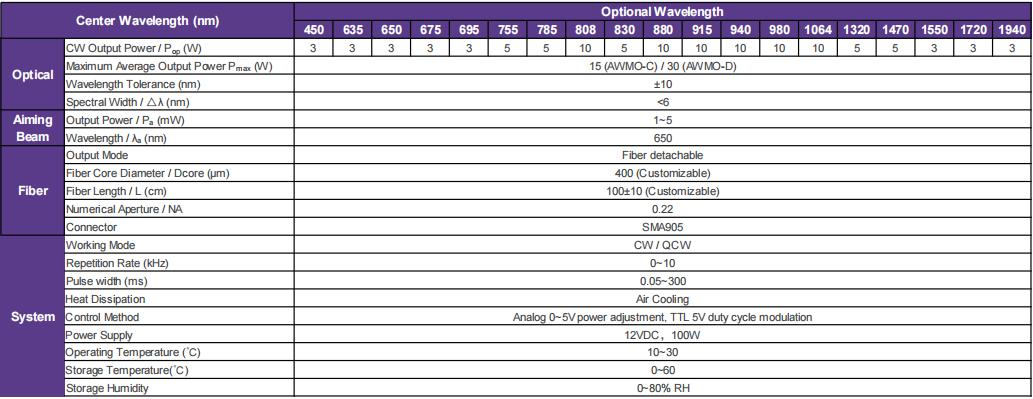
A multi-wavelength diode laser device can not only output a single wavelength independently to address specific issues but also deliver a combination of lasers at multiple wavelengths to achieve a synergistic effect. Compared to traditional single-wavelength laser therapy devices, its advantages are primarily reflected in:
1. Multi-wavelength synergy delivers superior therapeutic outcomes compared to single-wavelength treatments.
2. Comprehensive indications cover all treatment needs from the epidermis to deep muscles and joints.
3. For complex conditions, optimal wavelength combinations ensure precise and efficient treatment while shortening therapy duration.
4. Multi-functional design reduces medical equipment investment costs while simplifying clinical operations.
Due to their compact size, high efficiency, and long lifespan, multi-wavelength diode lasers are easily designed into portable therapeutic devices. Furthermore, their therapeutic characteristics—including multi-target treatment, synergistic effects, and deep penetration—provide modern physical therapy with an advanced, non-invasive tool that offers proven efficacy without drug side effects. This is driving rehabilitation medicine toward greater precision and efficiency.
Disclaimer: Some content in this article is sourced from the internet for technical research and discussion purposes. It is intended for reference and learning only. Please kindly point out any inaccuracies. For copyright concerns, contact us for verification and removal.





 777
777